Professional 3D Scanners

EinScan HX2

Handheld Industrial 3D Scanner — Dark, Reflective, and Difficult Surfaces Without Spray

Limited availability: Shining 3D has marked the EinScan HX2 as discontinued; the active replacement in the line is the EinScan Rigil. Rev1 sells HX2 while supply lasts. The HX2 pairs 13 crossed blue-laser lines with a blue-LED rapid mode in a 745 g handheld — capture a black-anodized bracket, a polished casting, or a full automotive body panel at up to 1.6 M pts/s and 0.04 mm accuracy with no spray prep on most surfaces. Built-in color camera with BlueStar Mapping captures photoreal texture in a single pass. Hands the mesh straight off to Geomagic Design X, EXModel, SHINING3D Inspect, or PolyWorks for reverse engineering and first-article inspection workflows. Full specifications →

0.04 mm
Single-Point Accuracy
1.6M pts/s
Max Point Rate (Laser)
No Spray
Dark / Reflective Capture
745 g
Handheld Weight
Light Source
13 Crossed Blue Laser Lines Blue LED Rapid Mode Hybrid Switchable
Scan Modes
Laser HD (Fine Detail / Reflective) LED Rapid (Markerless Speed) Color Texture (BlueStar Mapping)
Capture
0.04 mm Accuracy 0.05 mm Point Distance 120 FPS 420 × 440 mm FOV Built-in Color Camera
Software
EXScan HX SHINING3D Inspect EXModel Geomagic Design X PolyWorks Inspector
Financing
$9,999 $175 /mo est · 72 mo · 8% APR · OAC

HX2 is discontinued by Shining 3D — Rev1 sells while supply lasts and confirms current stock before any commitment. No self-serve checkout on this product. Authorized EinScan reseller and factory-trained EinScan support partner in the USA. Consider the active EinScan Rigil if HX2 inventory has cleared.

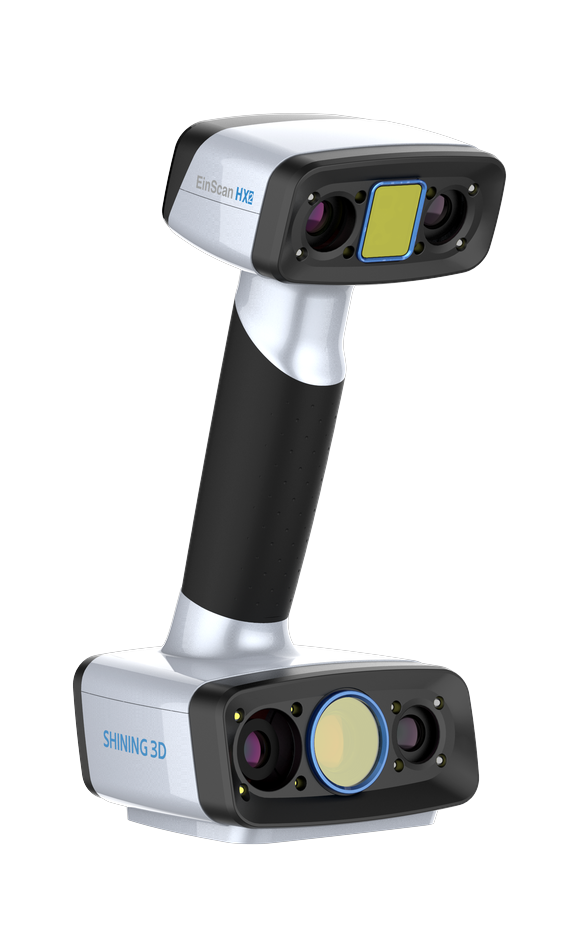
EinScan HX2 handheld industrial 3D scanner — front view
USA Customers · Service & Support

An Authorized EinScan Reseller and Factory-Trained Support Partner.

Rev1 Technologies is an Authorized EinScan Reseller and a factory-trained EinScan support partner. Application review, software-stack guidance, on-site or remote calibration assistance, and engineering consultation are delivered from Auburn Hills, Michigan — not routed through grey-market importers.

US Phone & Video Support Ships from US Warehouse Authorized Repairs & Calibration
01
HX2 Highlights

Dark and reflective surfaces without spray. 745 g handheld. 13 crossed blue-laser lines + LED rapid mode.

The EinScan HX2 is a handheld industrial 3D scanner built around a dual-light optical engine: 13 crossed blue-laser lines for fine-detail capture on dark, anodized, polished-metal, and reflective surfaces, plus a blue-LED rapid mode for high-speed markerless capture of geometrically-rich parts. Up to 1,600,000 points/s in laser mode at 120 FPS, with 0.04 mm single-point and 0.04 + 0.06 mm/m volumetric accuracy. The differentiator: the 13 crossed blue-laser lines resolve geometry on parts that conventional structured-light scanners struggle on — black anodized brackets, polished castings, machined aluminum — without spray prep. Built-in color camera with BlueStar Mapping captures photoreal texture in a single pass. Designed for industrial reverse engineering, first-article inspection, and reverse-engineering on the shop floor. Discontinued by Shining 3D; the active replacement is the EinScan Rigil. Rev1 stocks HX2 while supplies last.

No Spray
Dark / Reflective Capture
13 crossed blue-laser lines resolve geometry on dark anodized, polished, and reflective metal surfaces conventional structured-light scanners lose — without AESUB spray prep on most surfaces.
1.6M pts/s
Max Point Rate (Laser)
Up to 1,600,000 points per second in laser mode at 120 FPS — large parts (body panels, castings, weldments) finish in minutes, not hours.
0.04 mm
Single-Point Accuracy
EinScan-class professional accuracy at 0.04 mm single-point and 0.04 + 0.06 mm/m volumetric (vendor-published) — tight enough for reverse engineering and first-article inspection on machined parts.
Dual
Hybrid Light Source
13 crossed blue-laser lines for detail + dark/reflective capture; blue-LED rapid mode for markerless high-speed capture on geometrically-rich parts. Switchable per scan.
745 g
Handheld Weight
Single-operator handheld at 745 g balanced for shop-floor use — no tripod, no fixed-station rig, no second pair of hands required.
BlueStar
Color Texture Capture
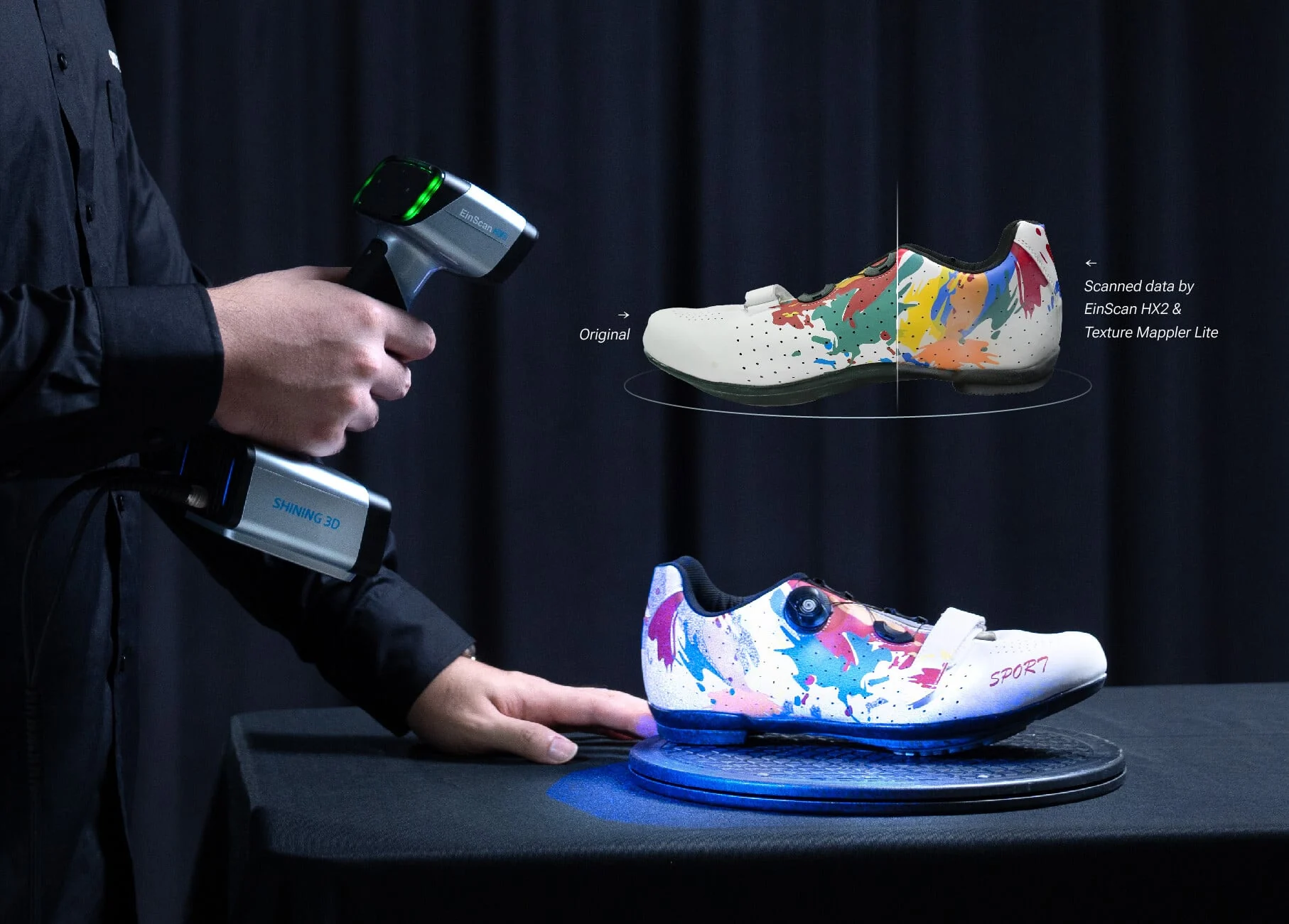
Built-in color camera with BlueStar Mapping captures photoreal texture alongside geometry in a single pass — rare on a laser-class handheld at this price.
02
Dual-Light Optical Engine

13 crossed blue lasers for the hard surfaces. LED rapid mode for the easy ones. Switch without tools.

Laser HD mode — dark, reflective, and machined surfaces without spray

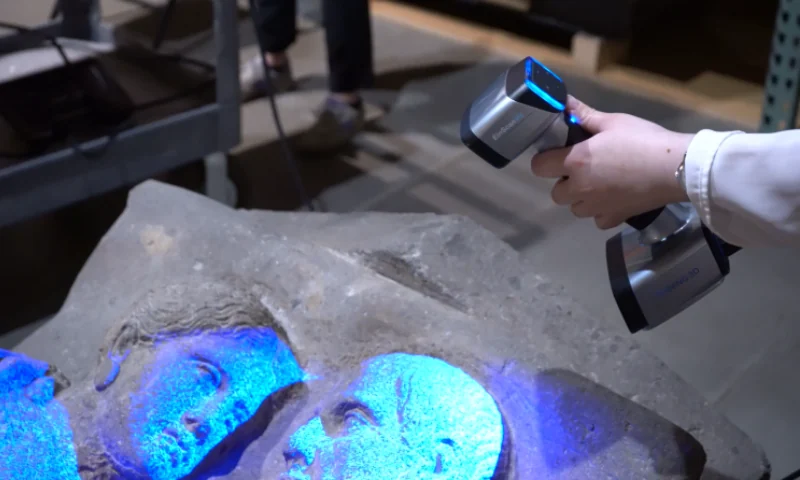
13 crossed blue-laser lines resolve fine geometry on the surfaces that structured-light scanners typically lose — black anodized brackets, polished castings, machined aluminum, dark composites. Minimum point distance 0.05 mm, single-point accuracy 0.04 mm, up to 1.6 M pts/s at 120 FPS. This is the core HX2 differentiator: capture the hard parts without spray prep, without dot stickers, without a wait for AESUB to dry.

13 crossed
Blue Laser Lines
0.04 mm
Single-Point Accuracy
EinScan HX2 Laser HD mode — 13 crossed blue-laser lines capturing dark and reflective industrial geometry
LED Rapid mode — markerless high-speed capture on geometrically-rich parts

Blue-LED Rapid mode trades the laser's dark-surface advantage for raw capture speed on parts where geometry already provides plenty of features — complex castings, dies, weldments, ducting. Markerless capture, full-color texture in a single pass (via BlueStar Mapping), 420 × 440 mm max FOV. Switch modes mid-scan; the scanner blends both data streams into a single mesh.

420 × 440 mm
Max FOV
Markerless
No Sticker Prep
EinScan HX2 LED Rapid mode — markerless high-speed capture with BlueStar Mapping color texture
Application Review
Scanning dark, anodized, or polished metal parts and tired of spray prep?

Send Rev1 a few sample parts — reflectivity, color, finish, geometry — and we will validate whether the HX2's 13 crossed blue-laser lines actually solve your spray-prep problem before you quote. If HX2 inventory has cleared, we will steer you to the active EinScan Rigil sibling.

03
Professional Accuracy & Repeatability

Vendor-published professional accuracy with repeatable real-world performance — without paying metrology-tier pricing.

The HX2 sits in the EinScan professional tier with vendor-published 0.04 mm single-point and 0.04 + 0.06 mm/m volumetric accuracy. For an industrial RE / first-article inspection workflow, the binding question is usually not the headline accuracy — it is whether the scanner holds that accuracy on the materials and finishes the shop floor actually deals with: dark anodized brackets, polished castings, machined aluminum, dark composites. The HX2 was designed for exactly that case. Where the metrology tier (FreeScan Combo Series) adds VDI/VDE 2634 + ISO 10360 + ISO/IEC 17025 lab certification for audit-grade deliverables, the HX2 delivers the optical-engine quality at a shop-floor price point.

HX2 Strength 1
Dark, reflective, machined surfaces — without spray
The 13 crossed blue-laser lines are designed for the surfaces that lose conventional structured-light scanners: black anodized parts, polished castings, dark composites, machined aluminum. The everyday case is markerless and spray-free.
HX2 Strength 2
Built for reverse engineering and first-article inspection
0.04 mm single-point + 0.04 + 0.06 mm/m volumetric is tight enough for scan-to-CAD reverse engineering, first-article dimensional inspection, and GD&T comparison — without paying for a metrology-tier lab cert that an industrial workflow does not need.
HX2 Strength 3
Single-operator handheld at 745 g
Light enough for a single shop-floor operator to run a full inspection job. No tripod, no fixed station, no powered cart. The scanner goes to the part — not the other way around.
EinScan Approach
A purpose-built industrial reverse-engineering scanner — the spray-free option for hard surfaces
Honest industrial spec. The HX2 publishes 0.04 mm single-point and 0.04 + 0.06 mm/m volumetric — vendor-published professional accuracy. The differentiator is not the headline number; it is that the accuracy holds on dark, reflective, and polished surfaces a structured-light scanner cannot capture without spray.
Dual-light optical engine. 13 crossed blue-laser lines for dark/reflective/machined surfaces; blue-LED rapid mode for markerless high-speed capture on geometrically-rich parts. Switch modes per scan — one scanner covers the whole industrial part list.
Open output formats and software stack. Clean STL, OBJ, PLY, ASC exports flow into Geomagic Design X, EXModel, SHINING3D Inspect, PolyWorks, and the broader CAD / inspection ecosystem — no proprietary lock-in.
The result: a handheld industrial scanner for the parts that other scanners need spray for — while supplies last.
EinScan HX2 vendor accuracy specification panel — 0.04 mm single-point, 0.04 + 0.06 mm/m volumetric, dual-light optical engine
HX2 industrial application proof — static case-study visuals stay visible for review, search indexing, and non-autoplay browser states.
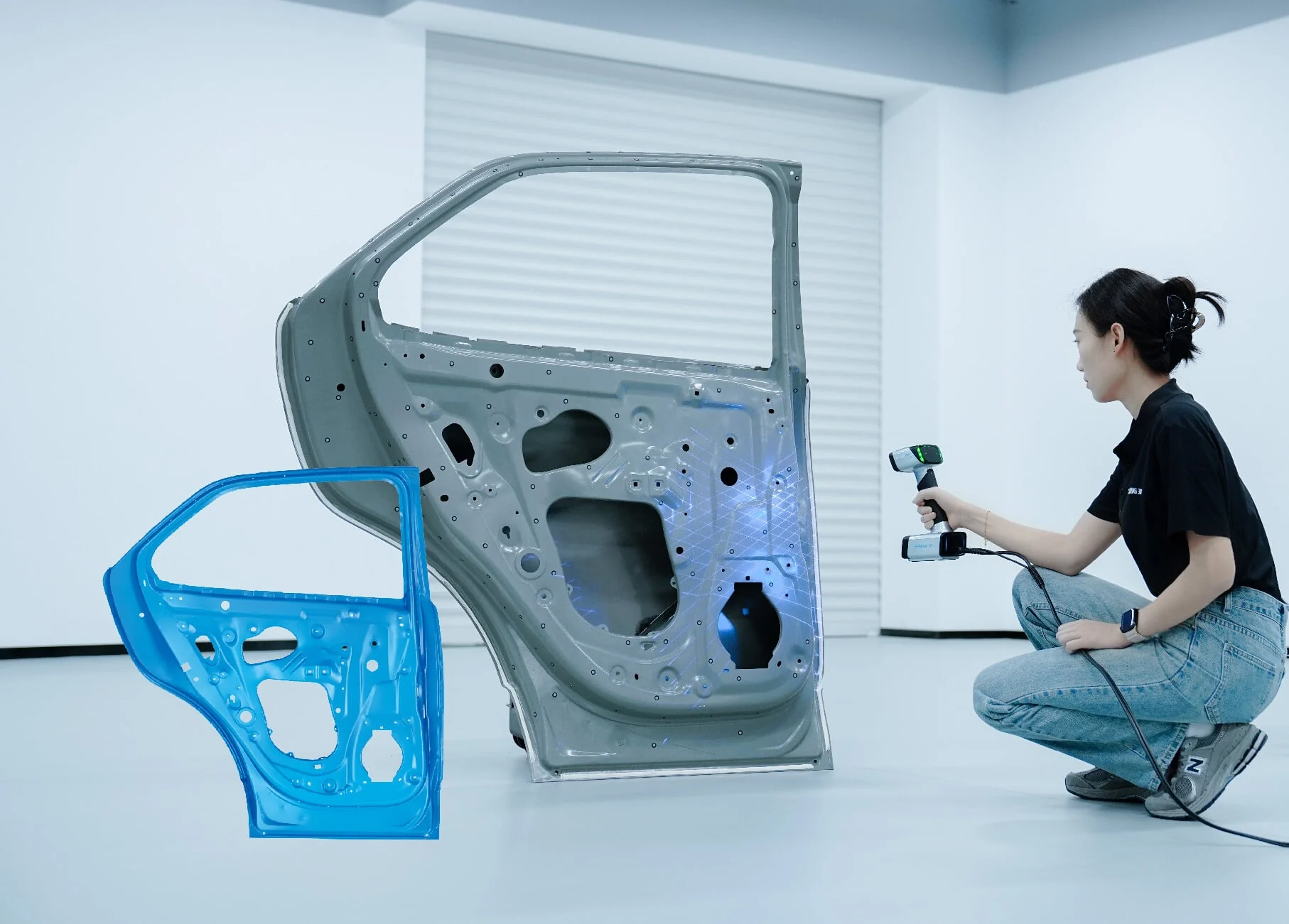
EinScan HX2 industrial application case study — automotive body panel and machined part capture
Automotive REBody panels, stampings, machined components — dark and reflective surfaces captured without spray prep.
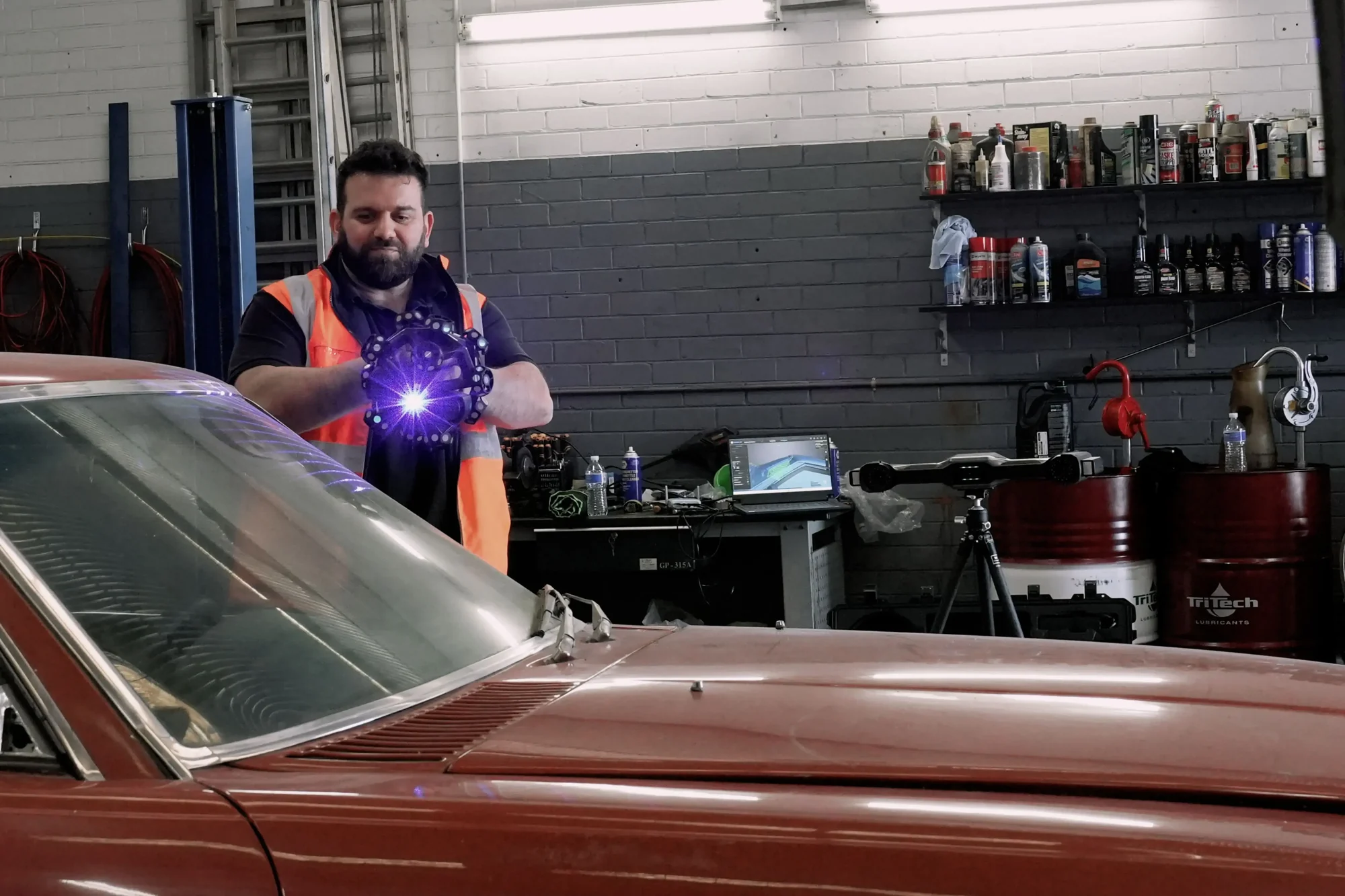
EinScan HX2 industrial application case study — aerospace bracket and tooling capture
Aerospace & toolingMachined brackets, turbine housings, ducting, dies — tight-tolerance reverse engineering and first-article inspection.
EinScan HX2 industrial application case study — heavy equipment casting and weldment capture
Heavy equipment & foundryCastings, weldments, large mold work — the parts that fit the laser-class optical engine's strengths.
04
Markerless Workflow

No dots. No spray. No prep time stacking up on the shop floor.

The setup time on a structured-light scanner is often longer than the capture time itself — reference dots, marker stickers, AESUB spray, masking the texture, waiting for the spray to dry. The HX2's 13 crossed blue-laser lines were designed to skip that step. For the dark, anodized, polished-metal, and reflective surfaces that traditionally force spray prep, the laser tracks geometry directly — markerless capture on the part as it sits. For geometrically-rich parts where surface reflectivity is not the binding constraint, the LED Rapid mode covers area fast. The combination keeps a shop-floor operator productive on the parts most likely to slow down a structured-light scanner.

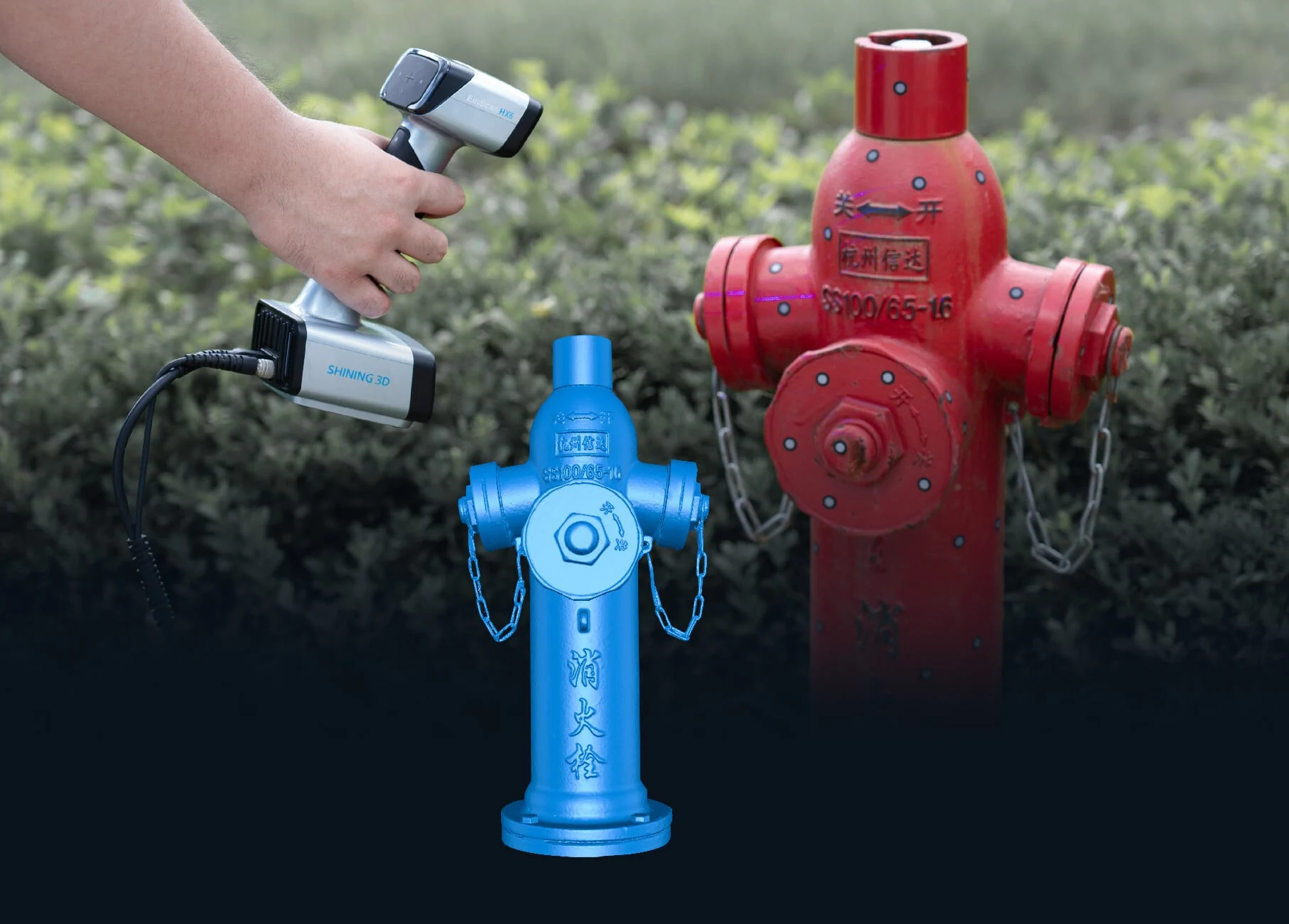
EinScan HX2 markerless scanning workflow — dark and reflective industrial parts captured without spray prep
No Spray
Markerless Laser HD
13 crossed blue-laser lines track geometry directly on dark and reflective surfaces — no AESUB Blue or White spray prep required on most industrial materials.
No Stickers
LED Rapid Mode
Blue-LED Rapid mode captures geometrically-rich parts markerless — no dot stickers, no fiducial layout, no setup choreography between parts.
One Pass
Color Texture (BlueStar)
Built-in color camera + BlueStar Mapping captures photoreal texture in the same pass as the geometry — no second rig, no offline UV-mapping step.
05
Industrial RE Track Record

Proven on automotive body panels, aerospace brackets, dies, and heavy castings — before discontinuation by Shining 3D.

Designed for the parts that lose conventional structured-light scanners
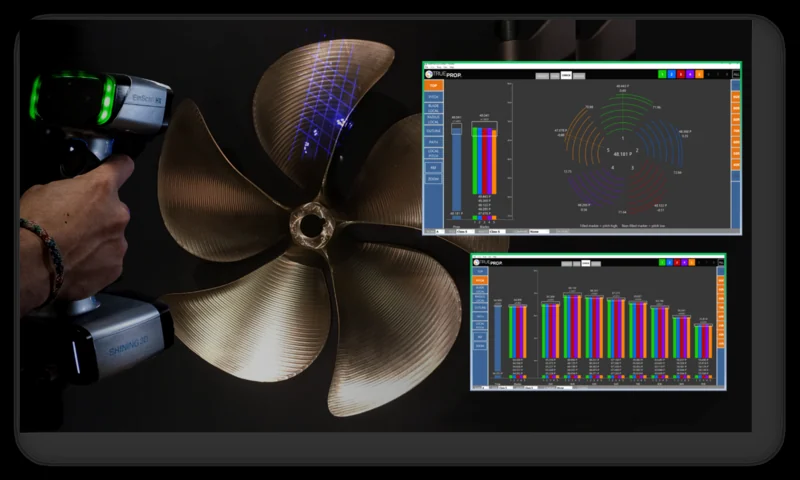
The HX2 was Shining 3D's answer to the industrial reverse-engineering and first-article-inspection workflow where spray prep was the binding constraint. 13 crossed blue-laser lines on dark anodized, polished, and reflective metal surfaces — the parts a structured-light scanner cannot capture without AESUB. Field-deployed at automotive OEMs, aerospace MROs, marine yards (propellers, impellers), heavy-equipment shops, and tooling/die houses worldwide.
13 lines
Crossed Blue Laser
The active EinScan Rigil carries forward the optical-engine architecture
Shining 3D has marked the HX2 as discontinued; the active successor in the line is the EinScan Rigil, which inherits the dark/reflective laser-capture advantage and adds the broader scan-mode envelope. Rev1 stocks HX2 while supply lasts — once cleared, Rigil is the active answer. Speak with Rev1 before commitment to confirm current HX2 availability vs. quoting the Rigil.
0.04 mm
Single-Point Accuracy

If your team is already trained on EXScan HX, the HX2 inventory window is the right time to add a second scanner without retraining the operator. If you are starting fresh, the active Rigil is the forward-looking choice with the longer support runway. Rev1 walks through the comparison during pre-sale review so the order matches the actual deployment horizon, not just the spec sheet.

06
Handheld Industrial Hardware

745 g single-operator handheld. Dual-light optical engine. Built for the shop floor, not the bench.

The hardware fits a single-operator industrial workflow.

A 745 g ergonomic handheld balanced for shop-floor use. The dual-light optical engine (13 crossed blue lasers + blue-LED rapid) handles dark/reflective and geometrically-rich parts from one scanner. Built-in color camera with BlueStar Mapping captures photoreal texture in a single pass. EXScan HX runs capture and alignment; output flows direct to Geomagic Design X, EXModel, SHINING3D Inspect, and PolyWorks for reverse engineering and first-article inspection. Operating system support: Windows 10/11.

745 g
Handheld Weight
120 FPS
Frame Rate
470 mm
Working Distance
EinScan HX2 software stack — EXScan HX onboard with downstream Geomagic Design X, EXModel, SHINING3D Inspect, and PolyWorks integration
EXScan HX + downstream RE/inspection stackCapture in EXScan HX. Export to Geomagic Design X, EXModel, SHINING3D Inspect, or PolyWorks Inspector for reverse engineering and first-article inspection.
Single-Operator Handheld
745 g ergonomic body, balanced for shop-floor use. No tripod, no fixed station, no second pair of hands required to run a full inspection job.
745 g / HANDHELD
Hybrid Alignment
Feature, marker, texture, and hybrid alignment options — cover everything from clean machined parts (feature) to large repeat scans (markers) to textured surfaces (hybrid).
5 / ALIGNMENT MODES
BlueStar Color Mapping
Built-in color camera with BlueStar Mapping captures full-color texture alongside geometry in one pass — rare on a laser-class handheld at this price point.
BLUESTAR / 1-PASS
08
Connectivity & Control

USB-C tethered industrial workflow with EXScan HX.

The HX2 is a tethered industrial scanner — it pairs with a Windows 10/11 workstation running EXScan HX over a USB-C connection for capture, alignment, and on-PC mesh reconstruction. Bandwidth is sized for the dual-light optical engine at 1.6 M pts/s and 120 FPS. For untethered field workflows, see the wireless EinScan Libre sibling; for the active EinScan replacement in this tier, see the Rigil.

USB-C Tethered Workflow
Capture streams to a Windows 10/11 workstation running EXScan HX. Designed for shop-floor and bench-top industrial RE / first-article inspection workflows.
Output Formats
STL, OBJ, PLY, ASC exports drop into Geomagic Design X, EXModel, SHINING3D Inspect, PolyWorks Inspector, and the broader CAD / inspection ecosystem.
Alignment Modes
Feature, marker, texture, hybrid, and global-markers alignment — covers clean machined parts (feature) through marker-pasted large repeat scans, with markerless capture as the default on the dual-light optical engine.
OS Compatibility
Windows 10/11 workstation running EXScan HX. Downstream Geomagic Design X, EXModel, SHINING3D Inspect, and PolyWorks Inspector all support the HX2's output formats natively.
09
Industrial Applications

Dark / reflective industrial RE. First-article inspection. Mold and die work. Marine impellers and propellers.

The HX2 is built for the industrial reverse-engineering and first-article-inspection workflow where surface reflectivity has been the binding constraint — black anodized brackets, polished castings, machined aluminum, dark composites. Where the workflow is reverse-engineering legacy parts to CAD, validating dies and molds for wear or revision, scanning automotive body panels and sheet-metal stampings, capturing marine propellers and impellers, or running first-article dimensional comparison on machined components, the dual-light optical engine and 0.04 mm accuracy class fit. Note: for general-purpose engineering or current-generation workflows, the active EinScan Rigil replaces the HX2 with a longer support runway.

🚗
Automotive Body & Stampings
Aerospace Brackets & Castings
🏭
Tooling, Mold & Die Wear
Heavy Equipment Castings
🚢
Marine Propellers & Impellers
🔧
Reverse Engineering / Scan-to-CAD
10
Software Stack

Capture, inspect, reverse-engineer, and report — in one connected workflow.

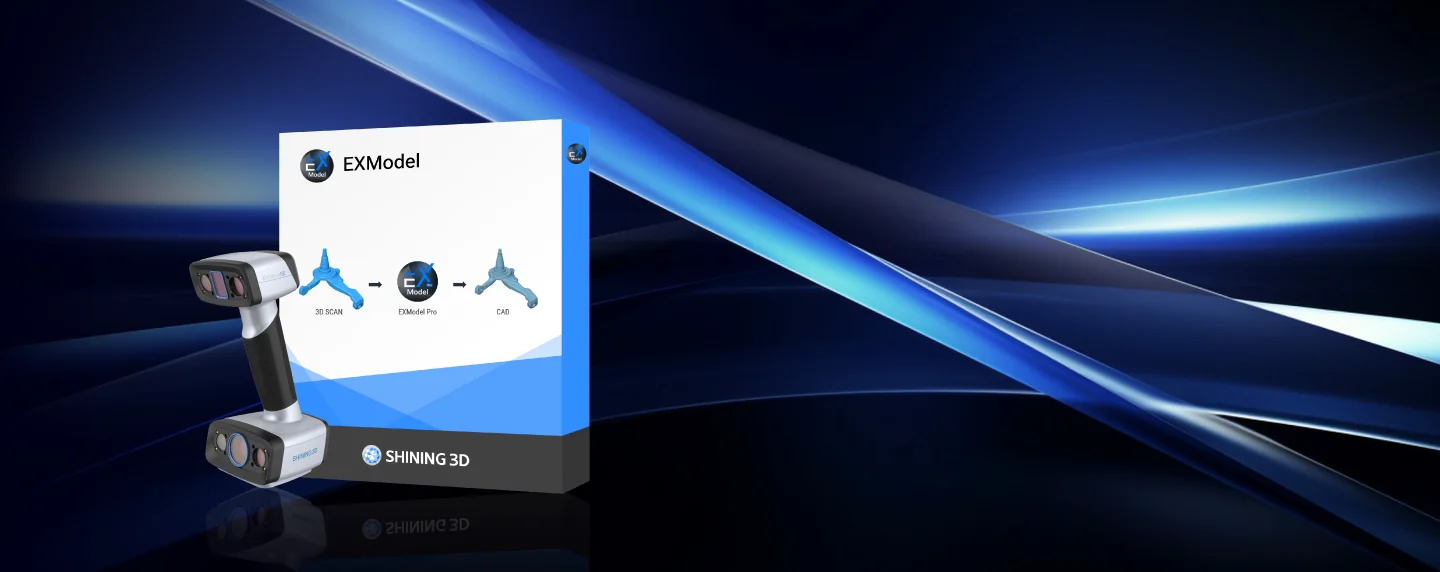
The HX2 ships with EXScan HX for capture and on-scanner processing, and connects natively to SHINING3D Inspect for GD&T inspection, EXModel for scan-to-CAD reverse engineering, and the broader industry stack — Geomagic Design X, Geomagic Control X, and PolyWorks Inspector. The data path stays inside the scanner's native ecosystem when that's the goal, and exports cleanly into third-party tools when it isn't. Rev1 confirms software-fit and seat-licensing during application review before purchase.

EXScan HX SHINING3D Inspect EXModel Geomagic Design X Geomagic Control X PolyWorks Inspector SolidWorks (via STL/OBJ) Fusion 360 (via STL/OBJ) Inventor (via STL/OBJ) Rhino (via OBJ) ZBrush (via OBJ) Blender (via OBJ/PLY) CloudCompare (via PLY) MeshLab (via PLY) 3D Systems Geomagic Wrap
11
Competitive Comparison

HX2 vs. industry-standard punch-up & intra-brand peers.

We benchmark the HX2 against the industrial RE peers buyers actually shortlist: the search-visible Creaform alternative Peel 3D 3.CAD-PRO, the structured-light reference Artec Eva, and the EinScan active successor Rigil. The HX2's position in the lineup is narrow but specific: handheld industrial reverse-engineering with the dual-light optical engine that handles dark and reflective surfaces without spray prep, at a $9,999 list price — while inventory lasts before transitioning to the Rigil.

Scanner
Accuracy Class
Light Source / Modes
Status
Where It Fits
EinScan Rigilactive EinScan successor · $4,999
0.04 mm SP · 0.04 + 0.06 mm/m vol
Hybrid Blue Laser + IR VCSEL · 25+25 crossed lines + IR rapid + markerless
Active · current line
The active EinScan replacement for the HX2 in this tier. Carries forward the dark/reflective laser-capture advantage, adds the broader scan-mode envelope (25+25 crossed lines, IR rapid, multiple-mode blending), runs on the newer EXScan platform, and ships at a friendlier $4,999 list price with longer support runway. New-team deployments should pick Rigil over HX2.
Peel 3D 3.CAD-PROCreaform-built alternative · search-visible peer
0.05 mm SP · 0.05 + 0.20 mm/m vol
White structured light + IR · markers optional
Active
Peel 3D 3.CAD-PRO is the Creaform-built friendly-priced professional handheld with the Peel.OS / Reverse Engineering-CAD bundle. Fair pick for buyers already in the Creaform ecosystem. The HX2 differentiates on the laser-only optical engine (sharper on reflective / dark machined surfaces, no spray), 0.04 mm vendor-published accuracy, and EinScan ecosystem integration (EXModel, SHINING3D Inspect, native Geomagic Design X). Choose Peel 3D when Creaform / Peel.OS is the existing standard; choose HX2 (while available) or Rigil (active) for the laser-mode advantages on industrial geometry.
Artec Evastructured-light professional-tier reference
0.10 mm SP · 0.10 + 0.30 mm/m vol
Structured white light · markers optional
Active
Artec Eva is the structured-light professional-tier reference, well-established in freeform / art / anatomy / forensic capture with a mature Artec Studio ecosystem. The HX2 lands with tighter accuracy class (0.04 mm vs. 0.10 mm) and a laser optical engine that resolves dark / reflective / machined surfaces structured-light loses. Pick Eva for freeform-capture in Artec Studio environments; pick HX2 (or Rigil) for industrial engineering and reverse-engineering on machined surfaces.
Creaform HandySCAN BLACKpremium industrial RE reference
0.025 mm SP · 0.020 + 0.040 mm/m vol (VXelements lab-cert)
Multi blue-laser cross-pattern · markers required
Active · premium
Creaform HandySCAN BLACK is the premium industrial-RE handheld reference, with materially tighter accuracy class and full VXelements / VXmodel software ecosystem. The HX2 lands at roughly one-quarter the price point with a comparable 0.04 mm accuracy class and the markerless dual-light optical engine. Punch up to HandySCAN when the workflow demands a published lab-cert metrology accuracy and the Creaform / VXelements ecosystem; the HX2 (and Rigil) cover the industrial RE use case at a fraction of the budget for the rest.
Rev1 takeaway: the HX2 is the right pick today for buyers (a) already trained on EXScan HX who want a second scanner without retraining, or (b) wanting the legacy $9,999 list price while supplies last. For new-team deployments and longer-runway support, the active EinScan Rigil at $4,999 is the forward-looking choice. Sideways-shop Peel 3D when Creaform / Peel.OS is the existing standard; sideways-shop Artec Eva for freeform capture in Artec Studio. Punch up to Creaform HandySCAN BLACK only when published VDI/VDE / VXelements lab-cert accuracy is the binding requirement. Rev1 confirms current HX2 stock and the right scanner for your workflow before quote.
Application Review
Comparing the HX2 to an Artec, Peel 3D, or another EinScan scanner?

Send Rev1 your target part, accuracy budget, and software stack and we'll tell you which scanner actually fits the application — including when a different scanner is the better answer.

12
Technical Specifications

EinScan HX2 — full specifications.

Optical Engine
Technology
Handheld industrial 3D scanner — dual-light optical engine
Light Source
13 crossed blue laser lines + blue LED rapid mode
Scan Modes
Laser HD (fine detail, dark / reflective) | LED Rapid (high-speed, geometrically-rich)
Markerless Capture
Yes — dark, anodized, polished, and reflective surfaces without spray prep
Color Texture (BlueStar)
Built-in color camera + BlueStar Mapping — photoreal texture captured in one pass
Accuracy
Single-Point Accuracy
0.04 mm
Volumetric Accuracy
0.04 + 0.06 mm/m
Accuracy Class
EinScan-class professional accuracy (vendor-published; lab-cert path on FreeScan Combo Series-class)
Capture Performance
Max Scan Speed (Laser)
1,600,000 points/s
Frame Rate
120 FPS
Point Distance (Min)
0.05 mm
Point Distance (Range)
0.25–3 mm (selectable)
Max FOV
420 × 440 mm
Working Distance
470 mm
Hardware
Weight
745 g
Form Factor
Single-operator ergonomic handheld
Color Camera
Built-in color camera with BlueStar Mapping
Connectivity & Alignment
Tethered Connection
USB-C to Windows 10/11 workstation
Alignment Modes
Feature | Marker | Texture | Hybrid | Global Markers
Software & Output
Native Software
EXScan HX
Inspection
SHINING3D Inspect · PolyWorks Inspector · Geomagic Control X
Reverse Engineering
EXModel · Geomagic Design X · Geomagic Wrap
Output Formats
STL · OBJ · PLY · ASC
OS Compatibility
Windows 10/11
Availability
Vendor Status
Discontinued by Shining 3D — replaced by EinScan Rigil
Rev1 Stock
While supplies last — confirm with Rev1 before commitment
Active Successor
EinScan Rigil · $4,999 · current line
14
Before You Buy

Get the right scanner for your workflow — before you commit.

Most 3D scanner returns happen because the buyer matched a price to a spec sheet instead of a workflow to a geometry. For the HX2 specifically, the buying decision has an extra wrinkle: the product is discontinued by Shining 3D, so Rev1 confirms current US stock and walks through whether the active Rigil is the better forward-looking pick before any commitment.

01
Stock + Successor Check

First call: confirm current HX2 inventory on Rev1's side, and walk through whether the active EinScan Rigil ($4,999, current line, longer support runway) is the better fit. If your team is already on EXScan HX, HX2 is a no-retraining add. If you are starting fresh, Rigil is the answer.

02
Surface & Software Validation

Send Rev1 your representative parts (dark anodized, polished metal, machined aluminum, etc.) and your downstream RE / inspection software (Geomagic Design X, EXModel, SHINING3D Inspect, PolyWorks). We confirm the dual-light optical engine actually solves your spray-prep problem before quote — not after.

03
Install & First-Scan Walkthrough

Rev1 verifies calibration on arrival, sets up scan profiles for your industrial part list, walks operators through EXScan HX, and runs a first-scan session on a representative workpiece — dark anodized bracket, polished casting, or whatever the spray-prep pain has been — so the scanner produces usable output on day one.

No commitment required. A pre-sale consultation is complimentary for any Rev1 scanner inquiry — talk through your application before you buy.

15
Buyer FAQ

EinScan HX2 questions buyers ask before quoting.

Is the EinScan HX2 discontinued?
Yes. Shining 3D has marked the HX2 as discontinued on their vendor PDP. The active replacement in the EinScan professional tier is the EinScan Rigil. Rev1 stocks HX2 while inventory lasts — first call should be Rev1 to confirm current availability. For new-team deployments, the Rigil ($4,999, current line) is the forward-looking choice with a longer support runway, current firmware updates, and continued vendor RMA coverage. The HX2 still makes sense if your team is already trained on EXScan HX and wants a second scanner without retraining.
What makes the HX2 different from a structured-light scanner like Artec Eva?
The HX2's 13 crossed blue-laser lines were designed for the industrial surfaces that lose conventional structured-light scanners: black anodized brackets, polished castings, machined aluminum, dark composites. Structured-light scanners typically need AESUB spray on those surfaces to capture cleanly. The HX2 skips the spray prep step on the everyday case. Accuracy class is also tighter (0.04 mm vs. 0.10 mm on Artec Eva). The trade-off: structured-light has UX strengths for freeform / art / anatomy capture; HX2 is purpose-built for industrial reverse engineering on machined geometry.
What accuracy can the HX2 hold in real shop conditions?
The HX2 publishes 0.04 mm single-point and 0.04 + 0.06 mm/m volumetric — vendor-published professional-tier accuracy. The accuracy claim holds on the industrial surfaces the scanner was designed for: machined aluminum, anodized parts, polished metal, dark composites. The HX2 does NOT carry a third-party VDI/VDE 2634 Part 3 / ISO 10360 lab certificate — that lives on the FreeScan Combo Series metrology tier. For reverse-engineering and first-article inspection workflows, the HX2 accuracy class is honestly positioned vs. premium lab-cert handhelds (Creaform HandySCAN BLACK) at a fraction of the price.
How fast can the HX2 capture, and what does that mean in practice?
The HX2 captures up to 1.6 million points/sec in laser mode at 120 FPS. In practice: a typical industrial RE scan on a dark anodized bracket or polished casting completes in a fraction of the time a structured-light scanner needs — especially when you factor in the eliminated spray-prep step. Larger parts (automotive body panels, weldments) that would normally need extensive spray prep before structured-light capture finish in minutes on the HX2 with markerless laser mode.
Does the HX2 actually scan dark and reflective surfaces without spray?
Yes, on most industrial surfaces. The 13 crossed blue-laser lines were specifically designed for dark anodized, polished, and reflective metal surfaces that conventional structured-light scanners need AESUB Blue or AESUB White spray to capture cleanly. For most industrial RE jobs — brackets, castings, machined components — the HX2 skips the spray-and-wait step entirely. Extremely shiny, polished mirror finishes, and very dark composites can still benefit from spray for the cleanest data; Rev1 stocks AESUB for the cases that need it.
How does the HX2 connect to a workstation? Is there a wireless option?
The HX2 is a tethered industrial scanner — USB-C connection to a Windows 10/11 workstation running EXScan HX. Capture streams to the workstation; alignment and mesh reconstruction happen there. For a wireless / standalone workflow, the sibling EinScan Libre is the right pick. For tethered industrial RE with the dark/reflective laser capture advantage, the HX2 (while available) or the active Rigil are the right picks.
What software does the HX2 ship with and integrate with?
The HX2 ships with EXScan HX for capture and alignment. Output formats are STL, OBJ, PLY, and ASC, which integrate with the EinScan software ecosystem (EXModel for scan-to-CAD reverse engineering, SHINING3D Inspect for GD&T inspection) and broader industry tools (Geomagic Design X, Geomagic Control X, PolyWorks Inspector). Rev1 confirms software-fit and seat-licensing during application review before purchase.
How does the HX2 compare to the active EinScan Rigil?
The Rigil and HX2 share the same accuracy class (0.04 mm single-point, 0.04 + 0.06 mm/m volumetric) and a related optical-engine concept. The Rigil is the active forward-looking choice: current firmware updates, current vendor RMA coverage, the newer EXScan platform, broader scan-mode envelope (25+25 crossed laser lines + IR rapid + multi-mode blending), and a friendlier $4,999 list price. The HX2 stays relevant if your team is already trained on EXScan HX, or while legacy inventory lasts at the $9,999 list price. New-team deployments should pick Rigil.
Is Rev1 Technologies an authorized EinScan dealer in the United States?
Yes. Rev1 Technologies is an Authorized EinScan Reseller and a factory-trained EinScan support partner, based in Auburn Hills, Michigan. Application review, current stock confirmation, software-stack guidance, calibration assistance, and engineering consultation are delivered from the US — not from grey-market importers or unauthorized resellers. For a discontinued product like the HX2, going through an authorized channel matters more, not less: warranty service, firmware, and any remaining vendor support all route through the authorized path.
What does Rev1's installation, training, and post-sale support include for the HX2?
Rev1 supports HX2 buyers from quote through production, even on a discontinued product. Pre-sale: stock confirmation, surface validation against representative parts, software-stack planning, accessory selection, and freight planning. At install: scanner verification on arrival, EXScan HX setup, calibration verification, operator orientation, and a first-scan walkthrough on a representative industrial part. Post-sale: phone and video support, authorized service routing, available firmware updates, and engineering guidance from Auburn Hills, Michigan — so warranty service does not route through grey-market channels.
Ready for answers?
Talk through the application before the quote.

Use the FAQ as the starting point. Rev1 can confirm accuracy class, software stack, accessory needs, and delivery considerations before the HX2 is ordered.

While Supplies Last

Check current HX2 availability — or talk to Rev1 about the active Rigil first.

The HX2 is discontinued by Shining 3D; Rev1 sells while supply lasts. Confirm current stock and weigh against the active EinScan Rigil ($4,999) before commitment. Authorized EinScan reseller and factory-trained EinScan support partner in the USA.

Auburn Hills, Michigan's premier source for industrial 3D printers, 3D scanners, materials, and software. Serving engineers and manufacturers across North America.

Products
Company
Contact
Payment methods
AMEXApple PayGoogle PayPayPalShop PayUnionPayVISA
Pay over time

© 2026 Rev1 Technologies. All rights reserved.