Bambu Lab H2D Dual-Nozzle. Laser. Cut. Plot. One Machine.
Dual-Nozzle. Laser. Cut. Plot. One Machine.
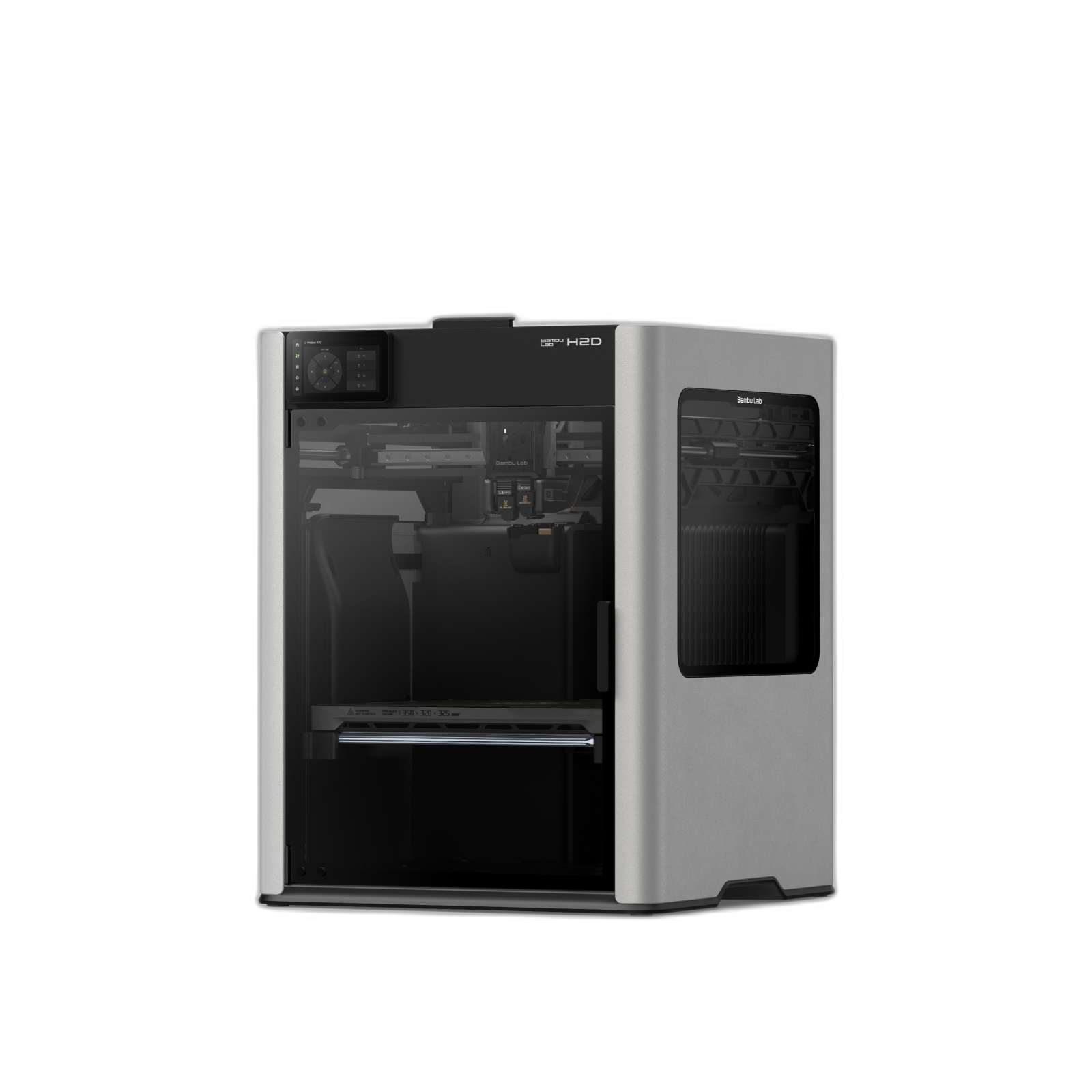
The Bambu Lab H2D is a new class of desktop machine: a fully enclosed CoreXY 3D printer with a true dual-nozzle toolhead — one nozzle for the part, one for support — plus optional 10W/40W laser engraving and cutting, a digital cutter and a plotter, all in one frame. With 350°C hardened nozzles, a 65°C active chamber, a large 325 × 320 × 325 mm build, and AMS 2 Pro multi-material with drying, it prints carbon-fiber composites and engineering polymers and then engraves or cuts the parts you make. Full specifications →
In stock in the USA — ships from Rev1. Want the laser combo, AMS HT, or help choosing between the H2D and X1-Carbon? Call (248) 707-2950.
Genuine Bambu Lab Hardware, Supplied & Supported in the USA.
Rev1 Technologies supplies genuine Bambu Lab printers and filament to engineers, makers and production teams across the United States. Setup guidance, material and laser-safety advice, Klarna financing, and US-based phone and video support are delivered from Auburn Hills, Michigan.


More than a printer — a whole maker workshop.
The H2D is Bambu Lab’s most capable machine, and it collapses several tools into one enclosure. The headline is the dual-nozzle toolhead: two independent hardened hotends mean you can dedicate one to your model and one to soluble or breakaway support, getting clean overhangs and complex geometry without the purge waste and color bleed of a single-nozzle multi-material setup. Around that sits a large, fast, 350°C-capable engineering platform that prints carbon- and glass-fiber composites, an actively heated chamber for warp-free high-temp parts, AMS 2 Pro multi-material with built-in drying, and optional laser, cutting and plotting modules that turn the same machine into an engraver and a cutter. For an engineering team, a product studio, or a serious maker, it does the work of a shelf full of equipment. Here is what stands out.
One frame, every capability.
Dual independent hotends, an optical motion system, a laser and cutting module, and AMS multi-material — the H2D packs print, engrave, cut and plot into one enclosed machine.
Two independent hardened nozzles with automatic X/Y offset calibration — dedicated support material, clean interfaces, far less purge waste.
350°C hardened hotends, a 120°C bed and a 65°C active chamber print carbon- and glass-fiber, PA, PC, PPS and more.
Optional 10W or 40W blue-light laser engraves and cuts wood, leather and more; a digital cutter and plotter handle vinyl, paper and drawing.
A 325 × 320 × 325 mm single-nozzle envelope (300 mm wide in dual-nozzle mode) for big parts and batches.
Multi-material printing with active drying — AMS 2 Pro keeps filament dry, and AMS HT dries to 85°C with a bypass for fiber-reinforced material.
Genuine Bambu Lab hardware with US warehouse stock, fully-assembled delivery, and setup, material and laser-safety help from Rev1.
Every subsystem, built into one enclosed machine.
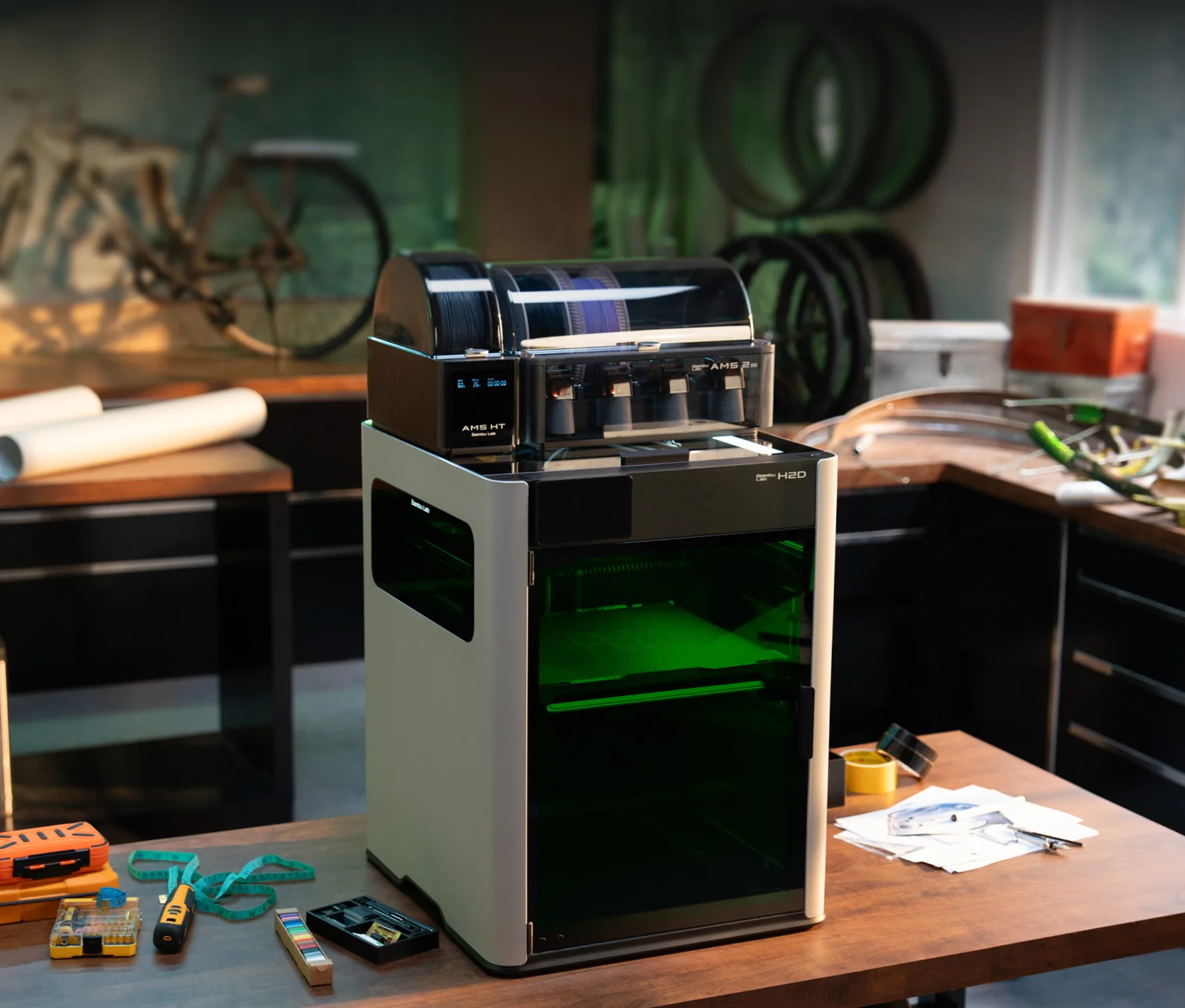
One sealed frame, engineered end to end.
A rigid die-cast CoreXY core, a fully enclosed and actively-heated chamber, and a serviceable toolhead — the H2D is built as one integrated machine, not a bolt-together kit. That enclosure is what makes high-temp and multi-function work reliable.
Two nozzles. Clean supports, no purge tower.
Dedicate one nozzle to the part, one to support.
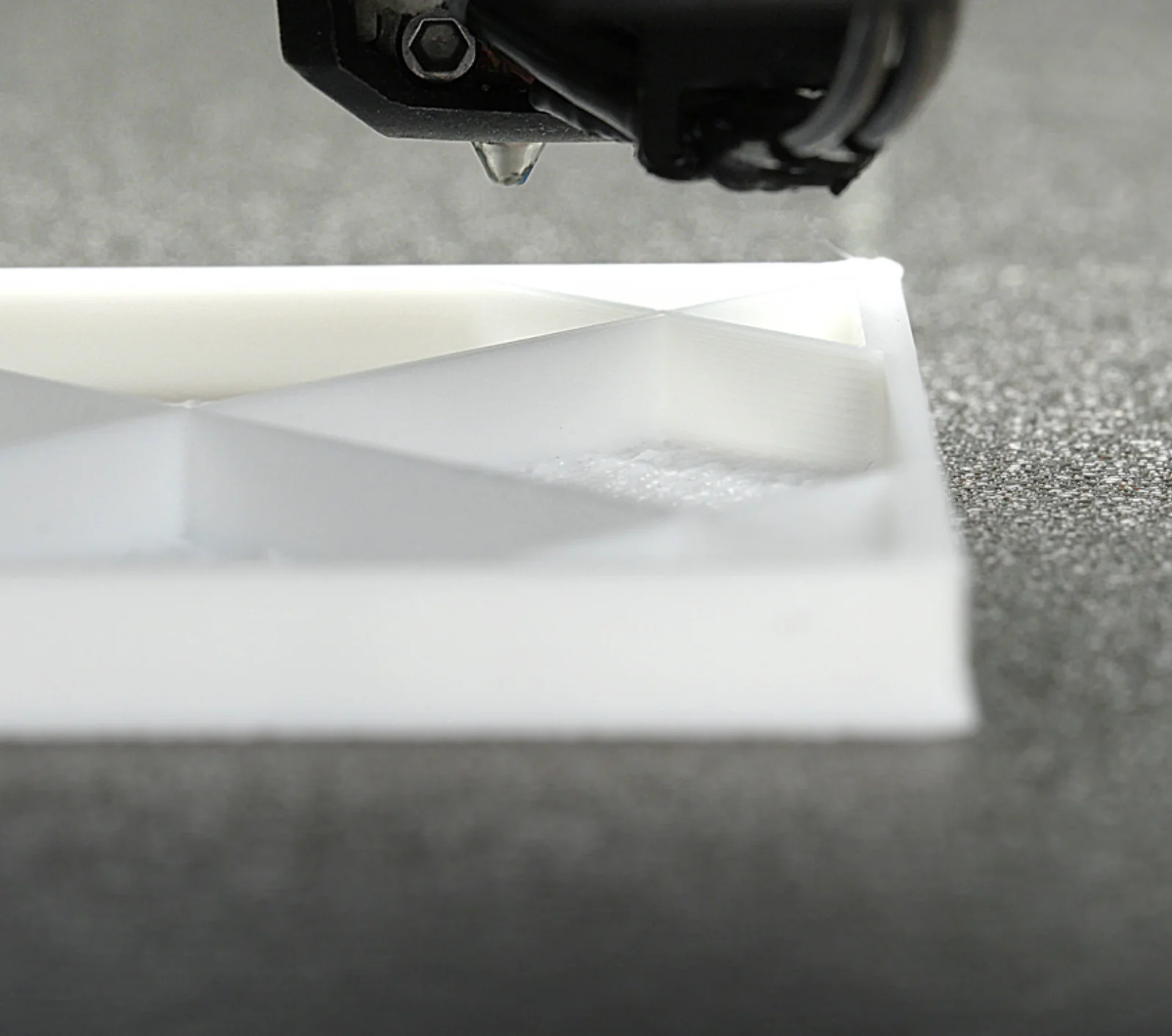
The H2D’s dual-nozzle toolhead runs two independent hardened hotends with automatic X/Y offset calibration. One lays down your model, the other a dedicated support — soluble or breakaway — for clean interfaces without cross-contamination.
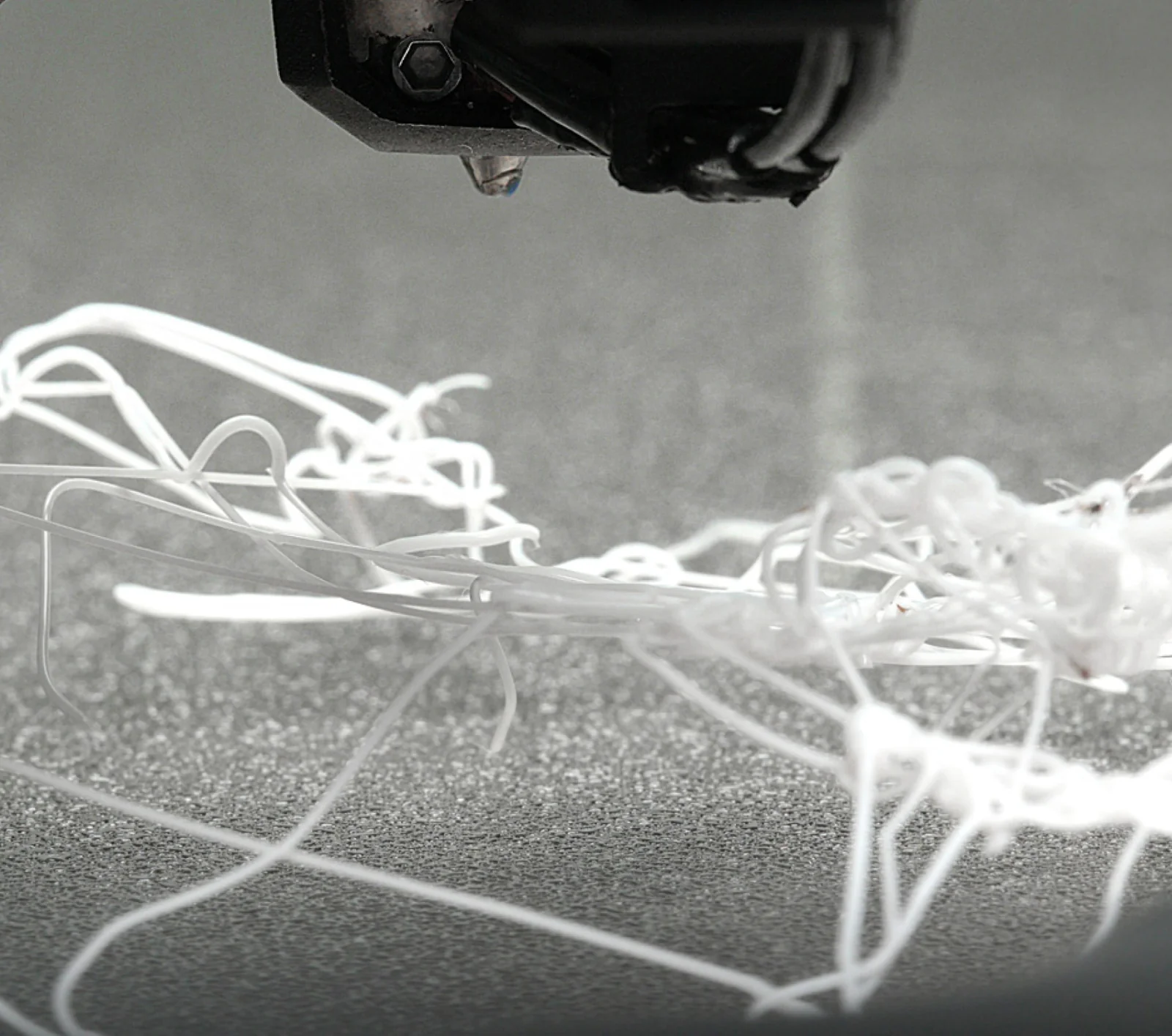
Single-nozzle multi-material printing wastes time and filament: every color or material change means purging the old material through the nozzle, building a purge tower and slowing the print. The H2D sidesteps that. Because each material has its own nozzle, the printer simply lifts one and prints with the other — no purge cycle, no color bleed, and far less waste on multi-color and multi-material jobs. It also unlocks proper support workflows: a dedicated support material releases cleanly or dissolves, so complex overhangs, internal cavities and intricate geometry come out crisp instead of scarred by same-material supports. Bambu’s smart algorithms optimize which nozzle does what to minimize waste further. For engineering parts and detailed models alike, two nozzles is a genuine capability step, not a gimmick.
Two independent nozzles, aligned automatically.
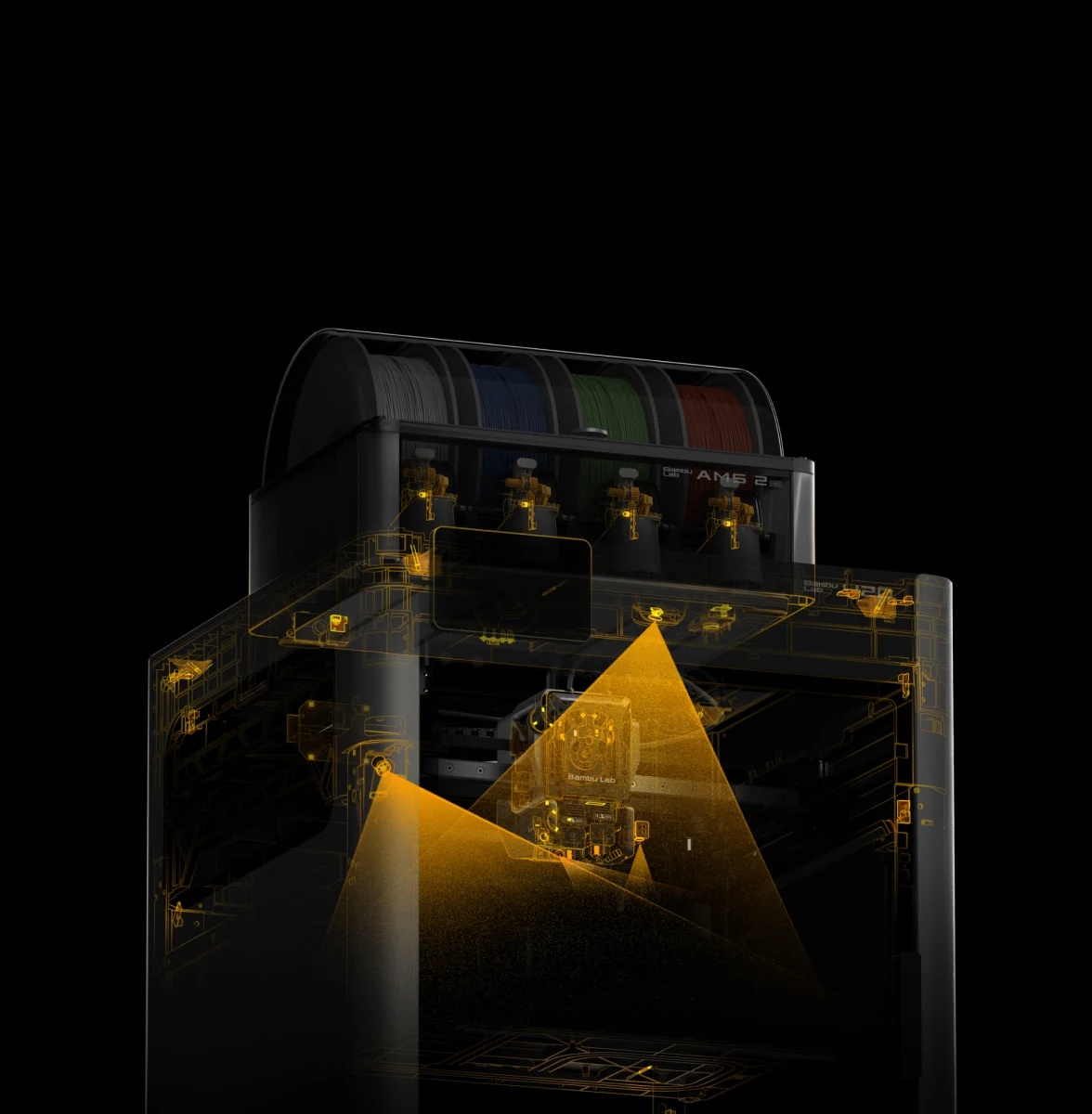
Each nozzle has its own hotend and filament path, and the on-board camera auto-calibrates their XY offset so multi-material seams line up. PICK intelligent recognition exposes the part and its supports separately for clean, easy-release interfaces — true dual-material printing without a purge tower or manual alignment.
A servo-driven toolhead built for speed and force.
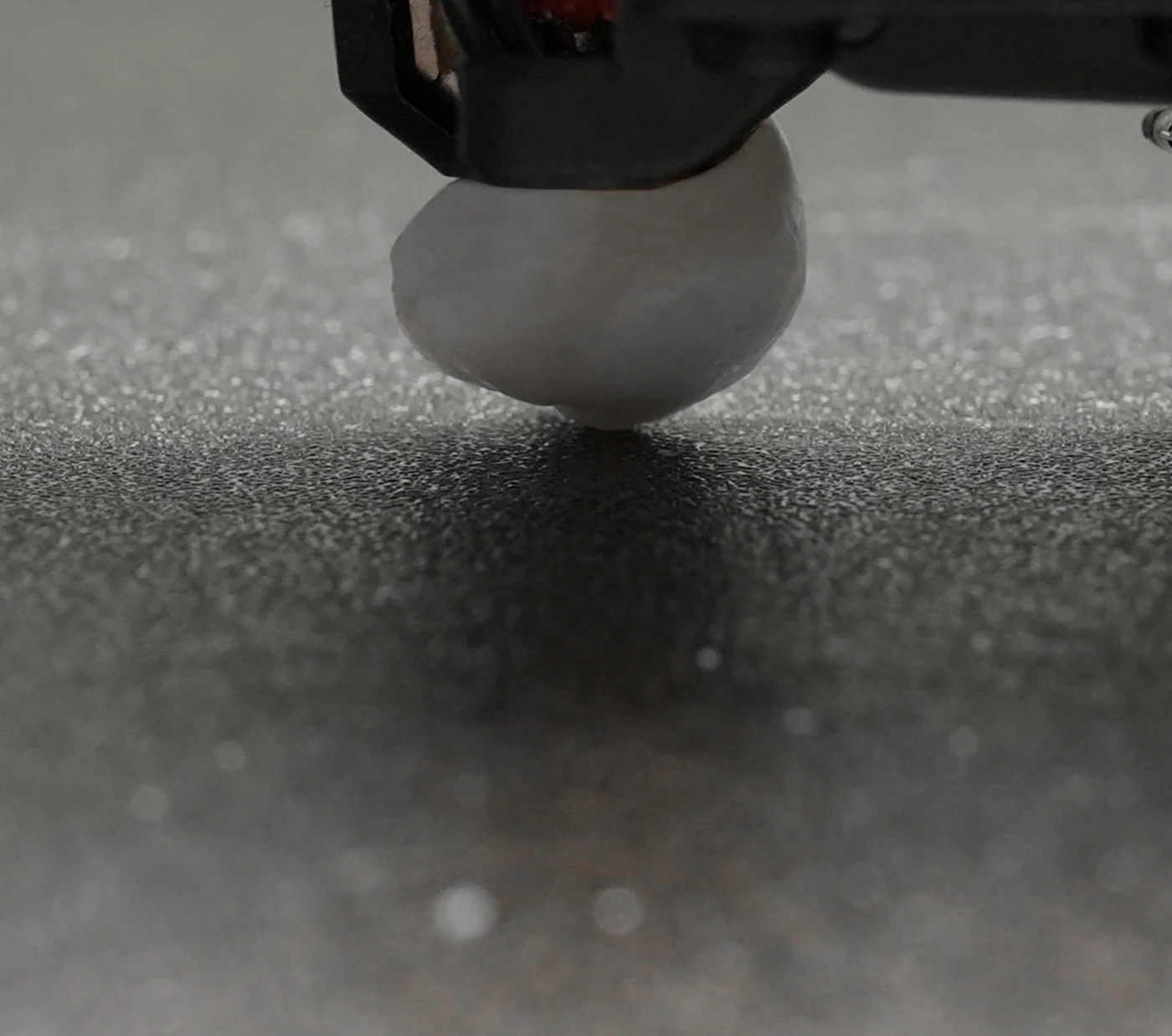
10 kg of force, high-flow throughput.
The H2D uses a DynaSense permanent-magnet servo extruder with up to 10 kg of force and 20 kHz sampling, feeding up to 65 mm³/s in high-flow mode at toolhead speeds to 1000 mm/s and 20,000 mm/s² acceleration.
Throughput is where the H2D pulls ahead of earlier desktop machines. A servo-driven extruder measures and corrects filament feed thousands of times a second, delivering the grip needed to push abrasive carbon-fiber composites and the precise control needed for clean retraction. Paired with a high-flow hotend that melts up to 65 mm³ of plastic per second, the H2D lays down material fast without starving the nozzle, so large parts and dense infill finish in a fraction of the time a standard extruder would take. The rigid CoreXY motion holds accuracy through the fast moves with vibration compensation and pressure advance. The result is a machine that is quick enough for production batches yet precise enough for functional engineering parts — and strong enough to run the reinforced materials those parts often demand.
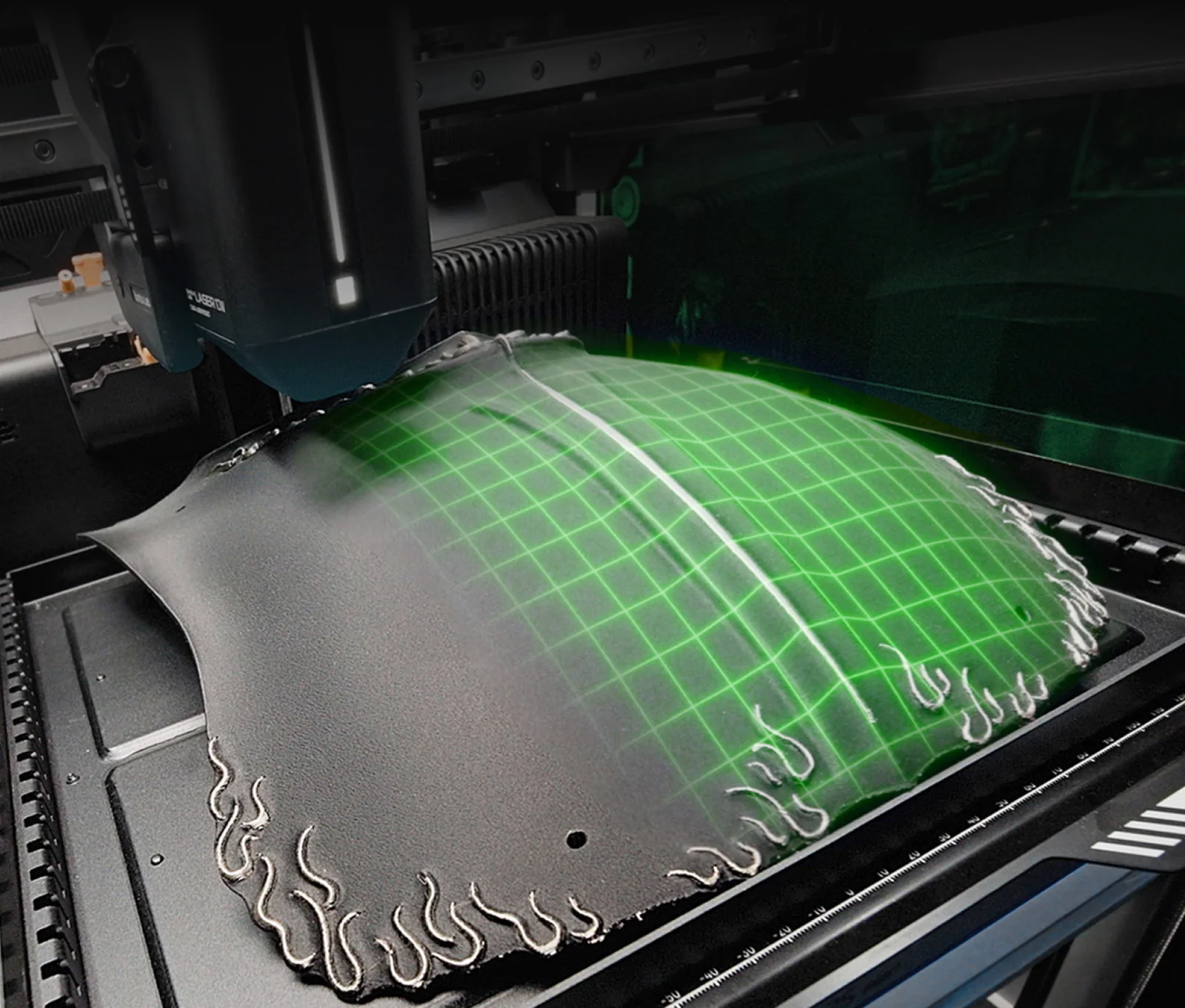
Smooth surfaces from a smarter motion system.
Z-axis and layer anti-aliasing smooth the print texture, WDR fusion compensates exposure for sharper detail, and vibration compensation with pressure advance holds accuracy at 1000 mm/s. Paired with the DynaSense servo’s real-time flow control, the H2D keeps detail crisp through the aggressive moves that finish big parts fast.
A big, fully-enclosed build for real parts.
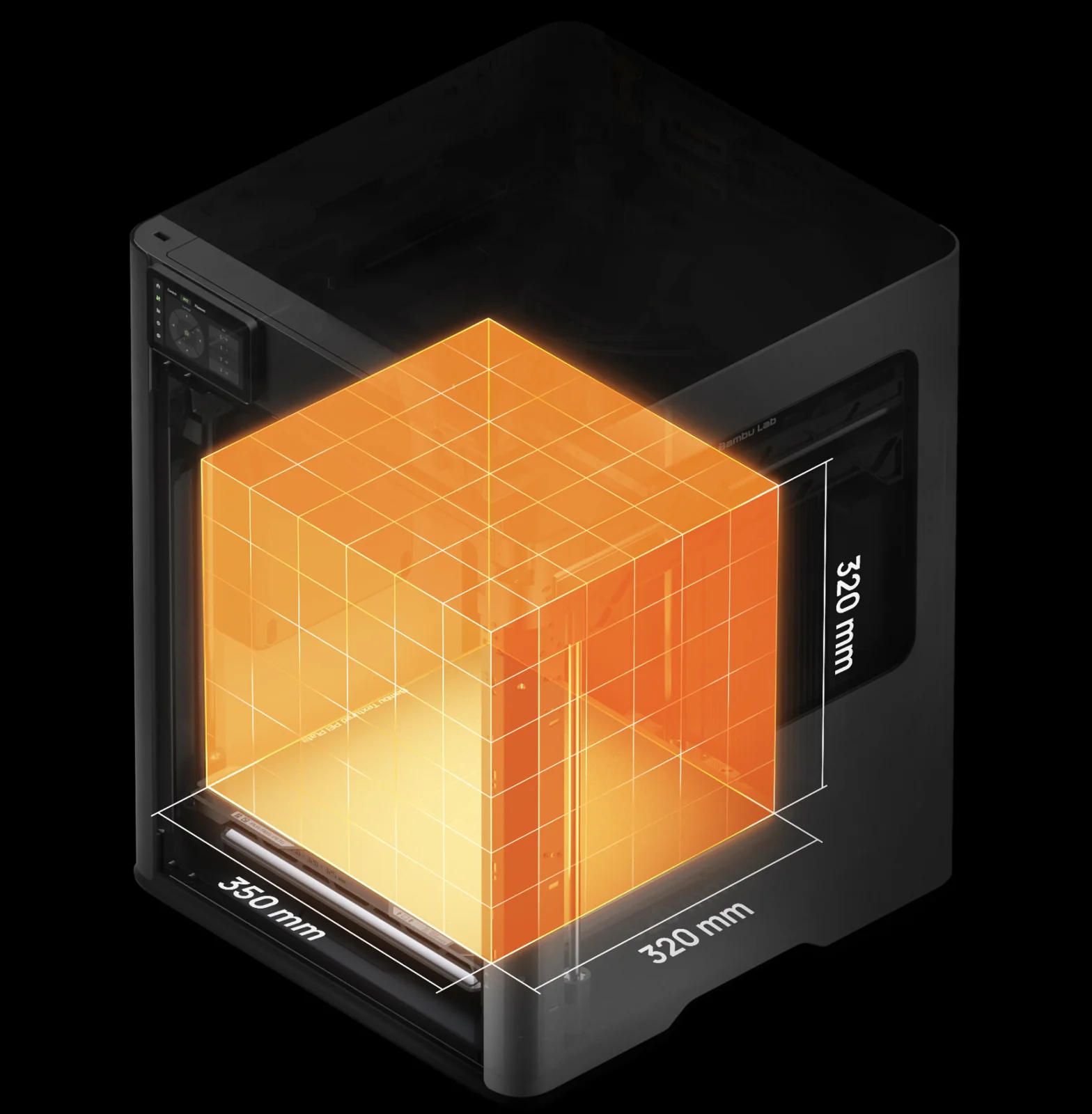
325 mm of enclosed, heated build.
A 325 × 320 × 325 mm build (300 × 320 × 325 mm in dual-nozzle mode) inside a sealed, actively-heated chamber — room for large functional parts, tall prints, and full multi-material plates that smaller enclosed printers can’t fit.
Engrave, cut and draw — without buying three machines.
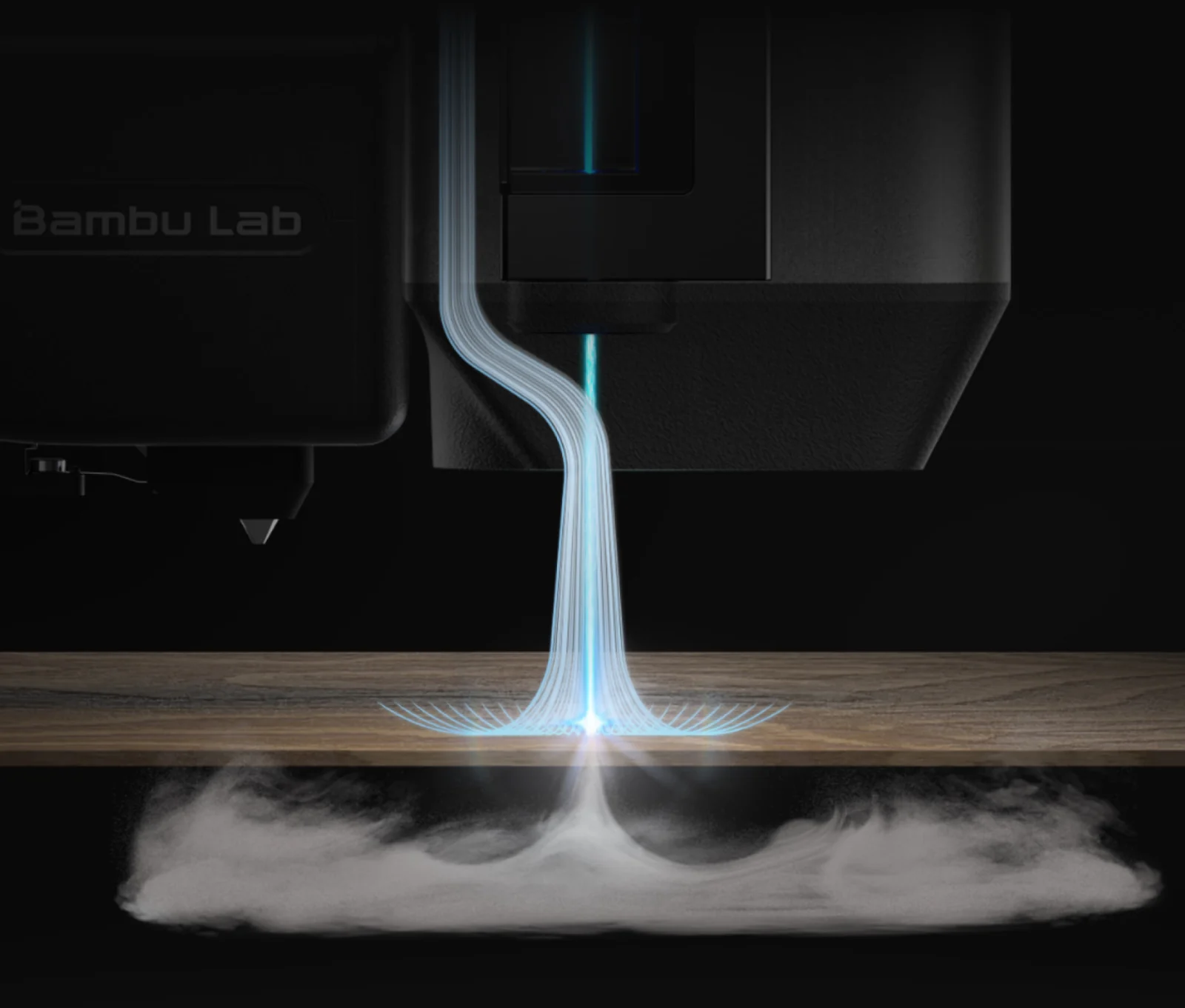
A laser engraver and cutter in the same frame.
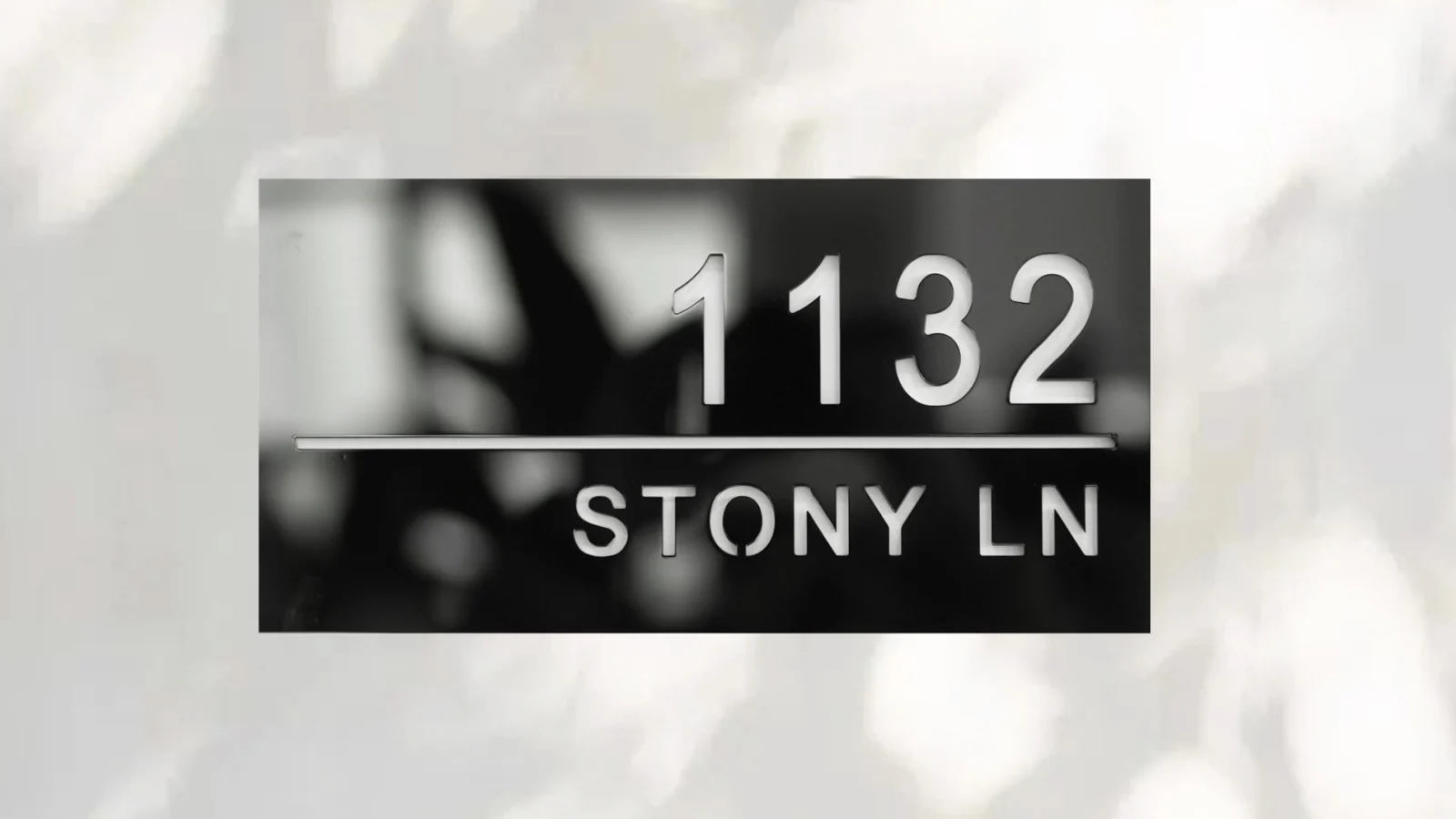
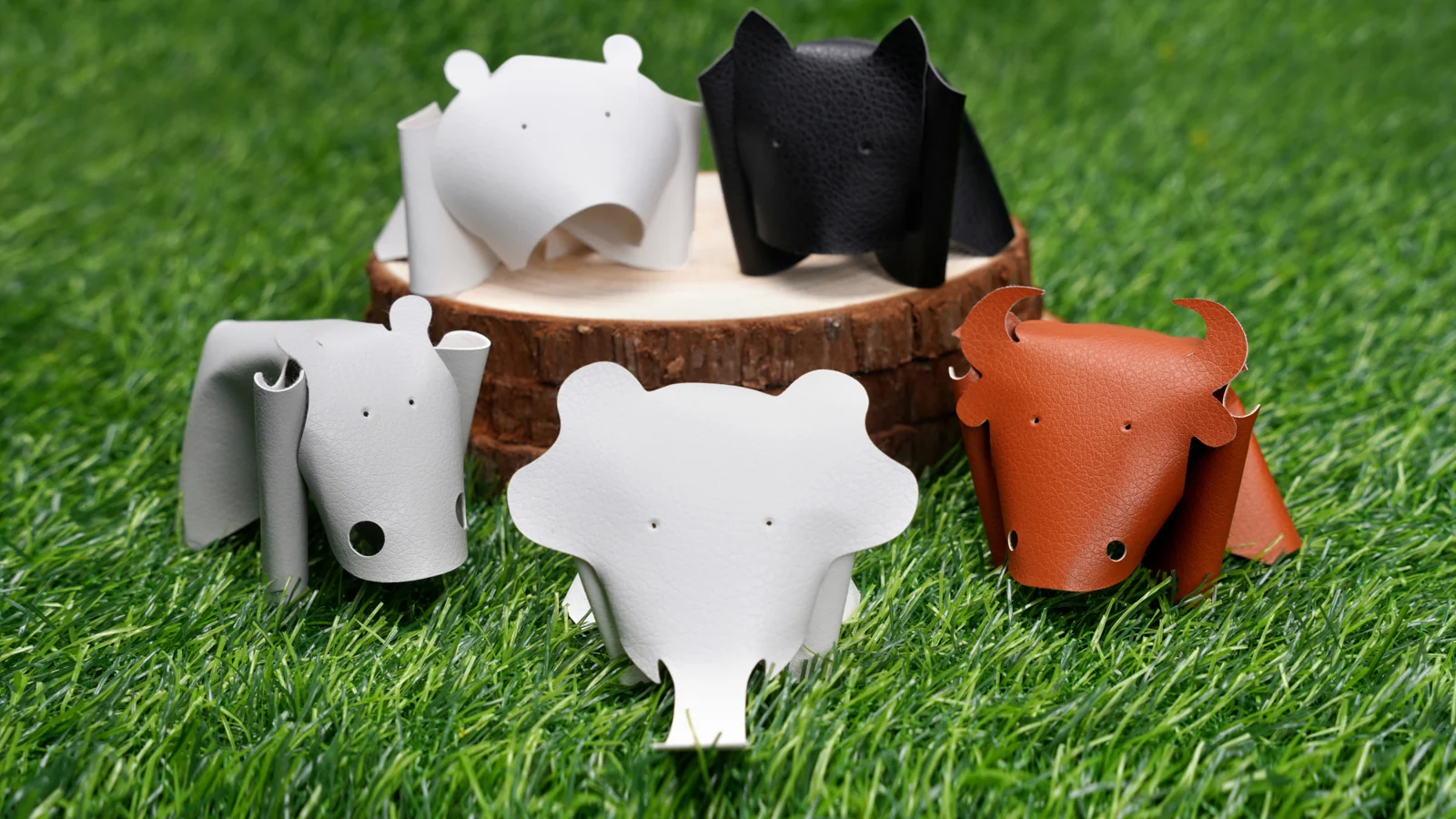
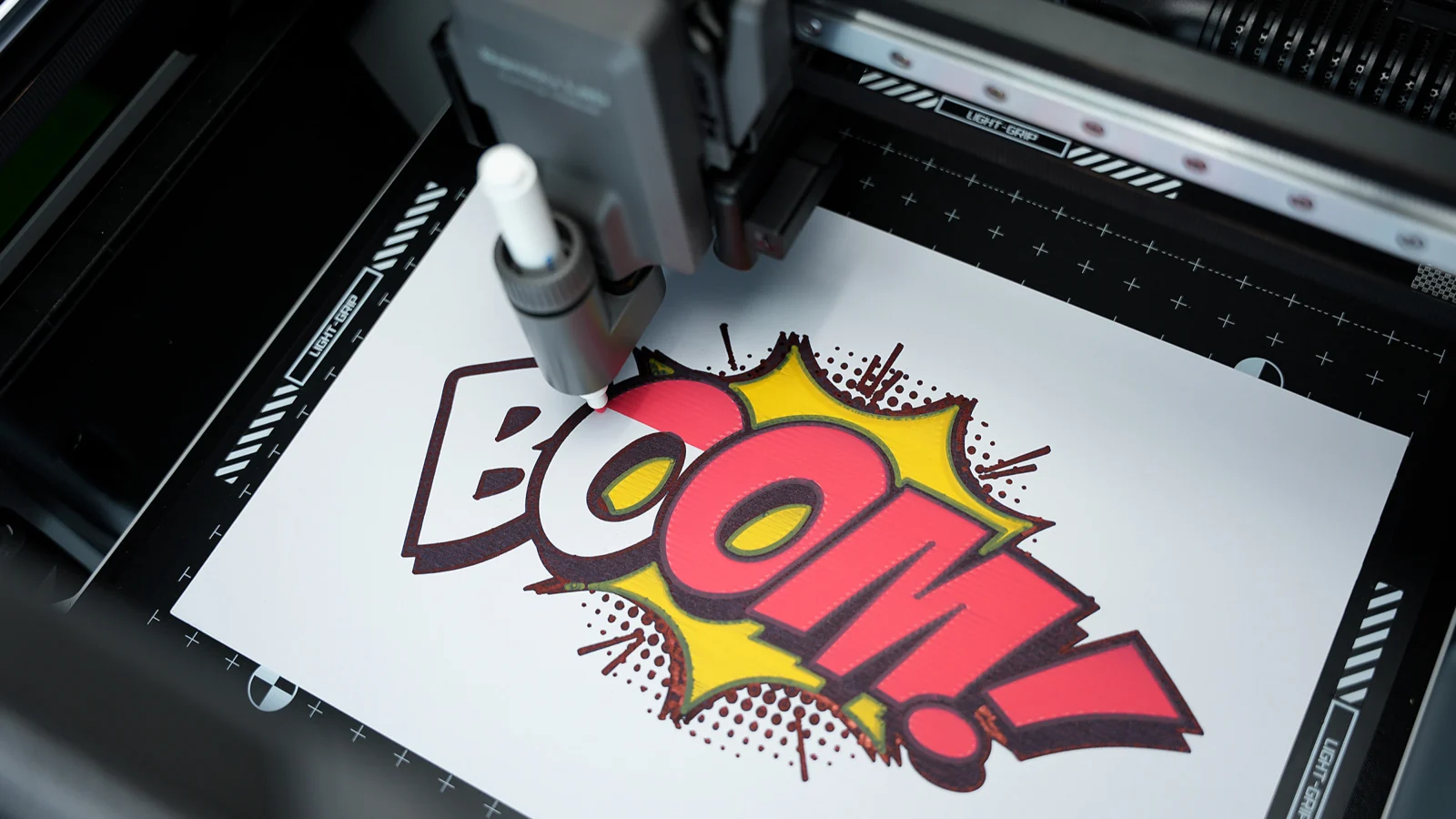
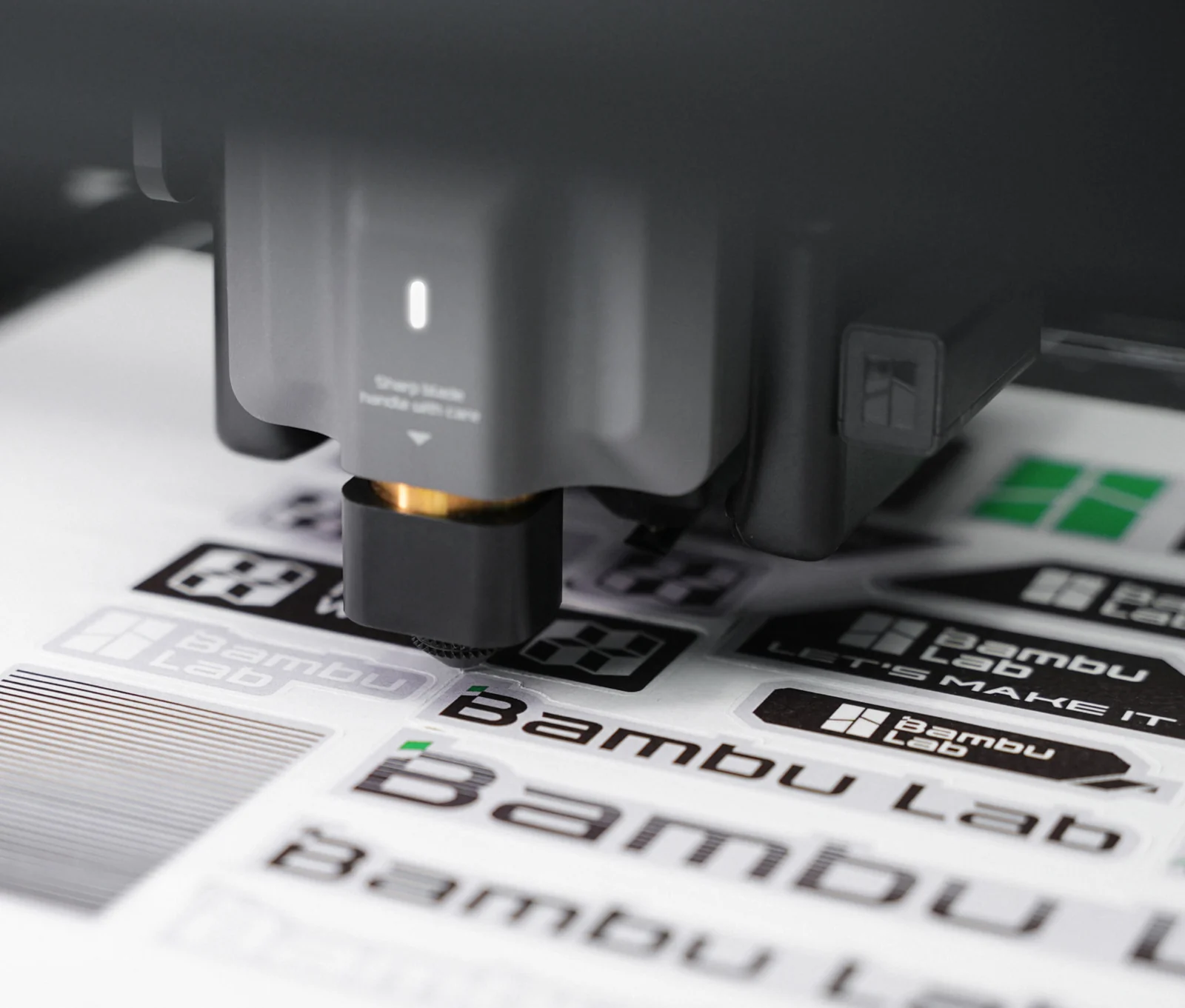
With the optional laser module the H2D becomes a 455 nm blue-light engraver and cutter: the 10W cuts up to 5 mm of plywood, the 40W up to 15 mm. A digital cutting module handles vinyl, paper and leather, and a plotter draws — all on the same enclosed, camera-monitored platform.
Most makers who want laser engraving, vinyl cutting and 3D printing end up with three separate machines and three footprints. The H2D folds them together. Swap the toolhead and the same precise CoreXY motion that prints your part now engraves a logo into it, cuts a gasket, or plots a drawing — with an enclosed chamber, an air-assist pump on the laser combo, and a BirdsEye camera for framing and monitoring. Engrave a leather patch, cut a plywood enclosure panel, score a vinyl sticker, then print the parts that go with them, all from one device and one software ecosystem. For product studios, prototyping labs and ambitious hobbyists, that consolidation saves money, bench space and the friction of moving a project between tools. Rev1 can advise on the 10W versus 40W laser and the safety setup your space needs.
One machine, four jobs — engrave, cut, plot and print-then-cut on the same enclosed platform:
Multi-function, safely contained.

Laser-safe windows, enclosed operation.
The H2D’s laser combo runs behind certified safety windows — monitor engraving and cutting without goggles — inside the same enclosed, filtered chamber that contains fumes and particulates. Emergency controls and interlocks are built in.
Functional, multi-material, production-grade parts.
Hard and soft, structure and support, in one part.
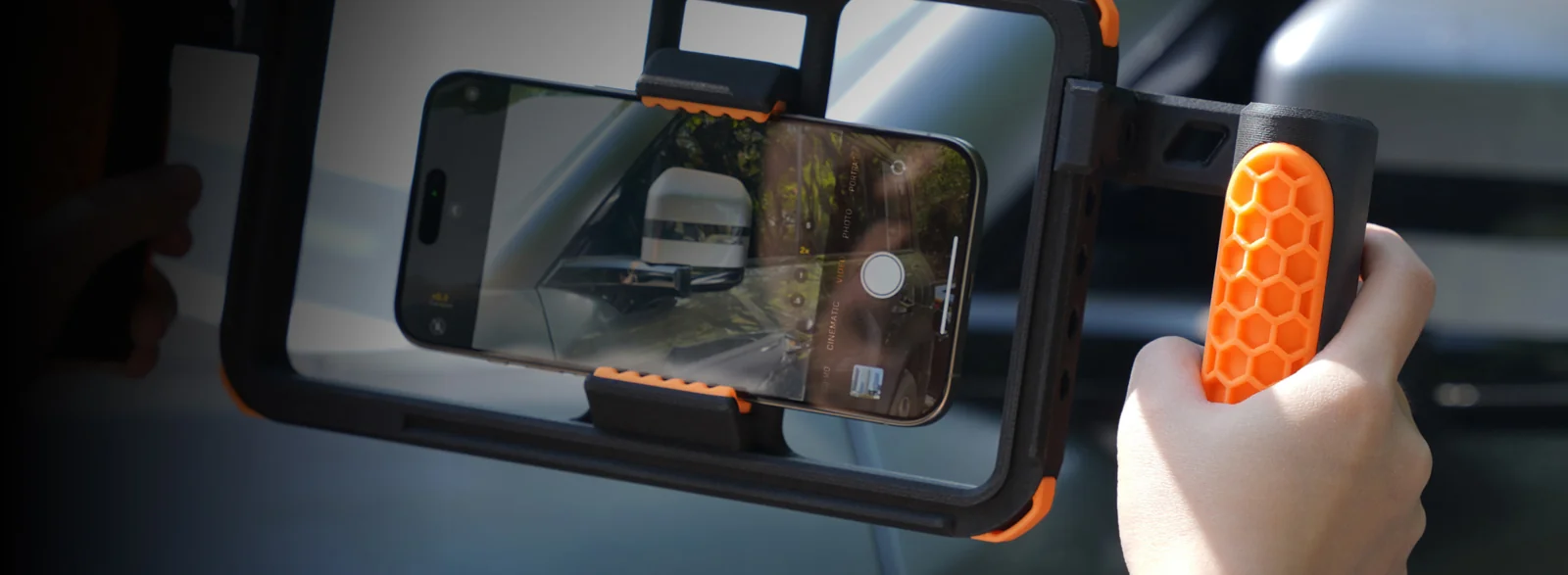
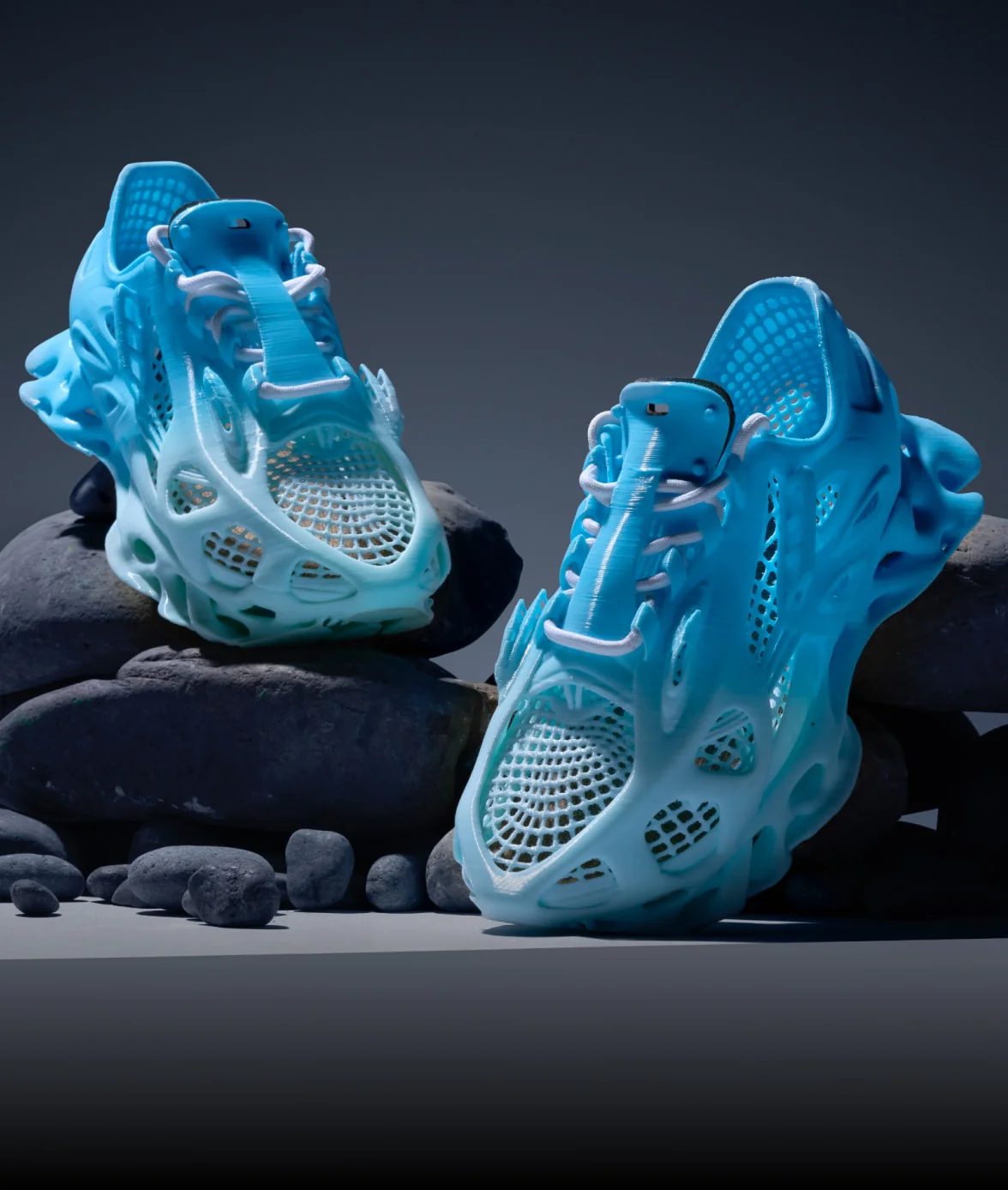
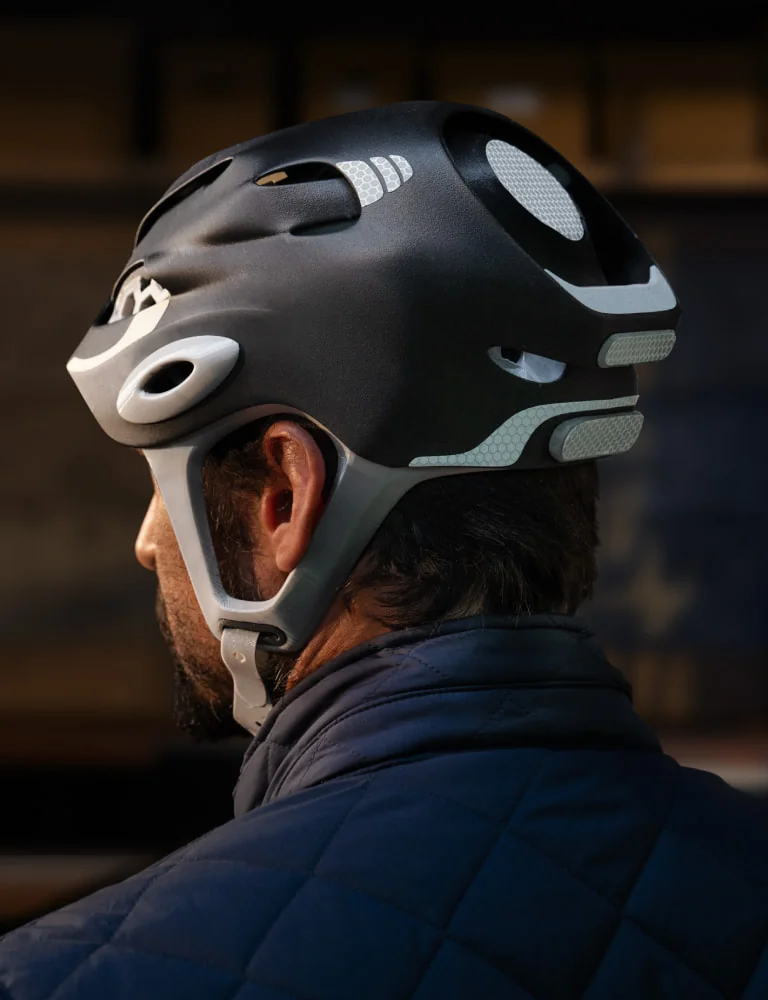
The dual-nozzle toolhead and engineering thermals let the H2D produce parts a single-material printer can’t: rigid frames with soft-touch grips, structural bodies with soluble-support internals, and carbon-fiber components with clean cosmetic surfaces. From functional prototypes and end-use fixtures to detailed display models and consumer products, it delivers the strength, finish and dimensional consistency that production work demands — then engraves or cuts the finishing touches with the laser. Whether you are iterating an engineering design, manufacturing small batches, or building a product from concept to final piece, the H2D covers the whole job. Rev1 helps you match nozzles, materials and modules to the parts you make.
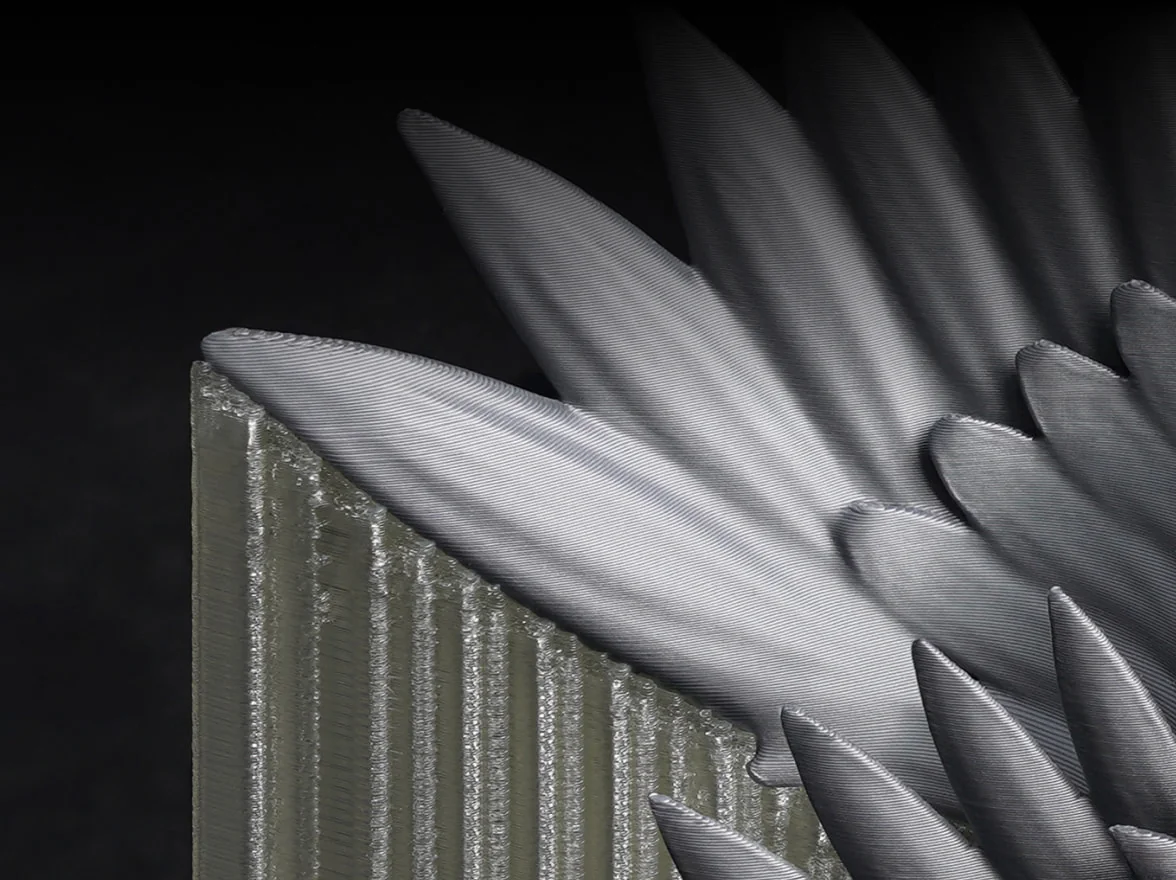
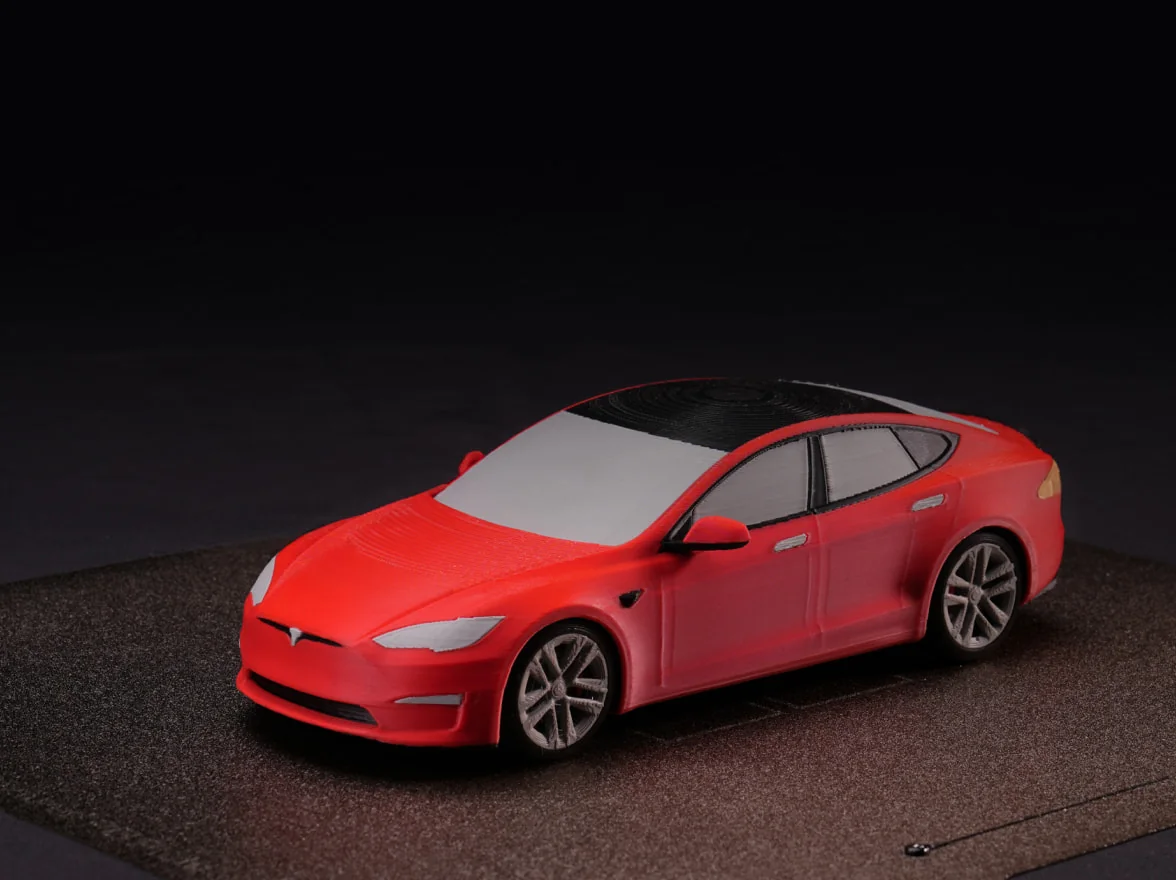
From engineering parts to display models — a sample of what the H2D turns out:
Calibrated, watched and corrected automatically.
High-precision parts, monitored end to end.
The H2D pairs automatic calibration with a full sensor suite: a 1080p live-view camera, an AI-backed nozzle macro camera, and on the laser edition a high-resolution BirdsEye camera — so the machine watches the build, frames laser jobs, and catches problems early.
Accuracy on a fast, dual-tool machine depends on knowing exactly where everything is, and the H2D measures continuously. It auto-calibrates the dual-nozzle offsets, flow and motion so parts come out dimensionally true without manual tuning, while the camera array provides AI failure detection, first-layer and nozzle monitoring, timelapse, and remote viewing from the Bambu Handy app. The AI nozzle camera inspects extrusion up close; the BirdsEye camera on the laser combo frames and previews engraving jobs. Combined with the rigid enclosed frame, that sensing is what lets the H2D hold tight tolerances on intricate geometry — turbine blades, lattices, threaded features — print after print, whether you are in the room or checking from your phone.
Watched, calibrated and controlled — on the machine.
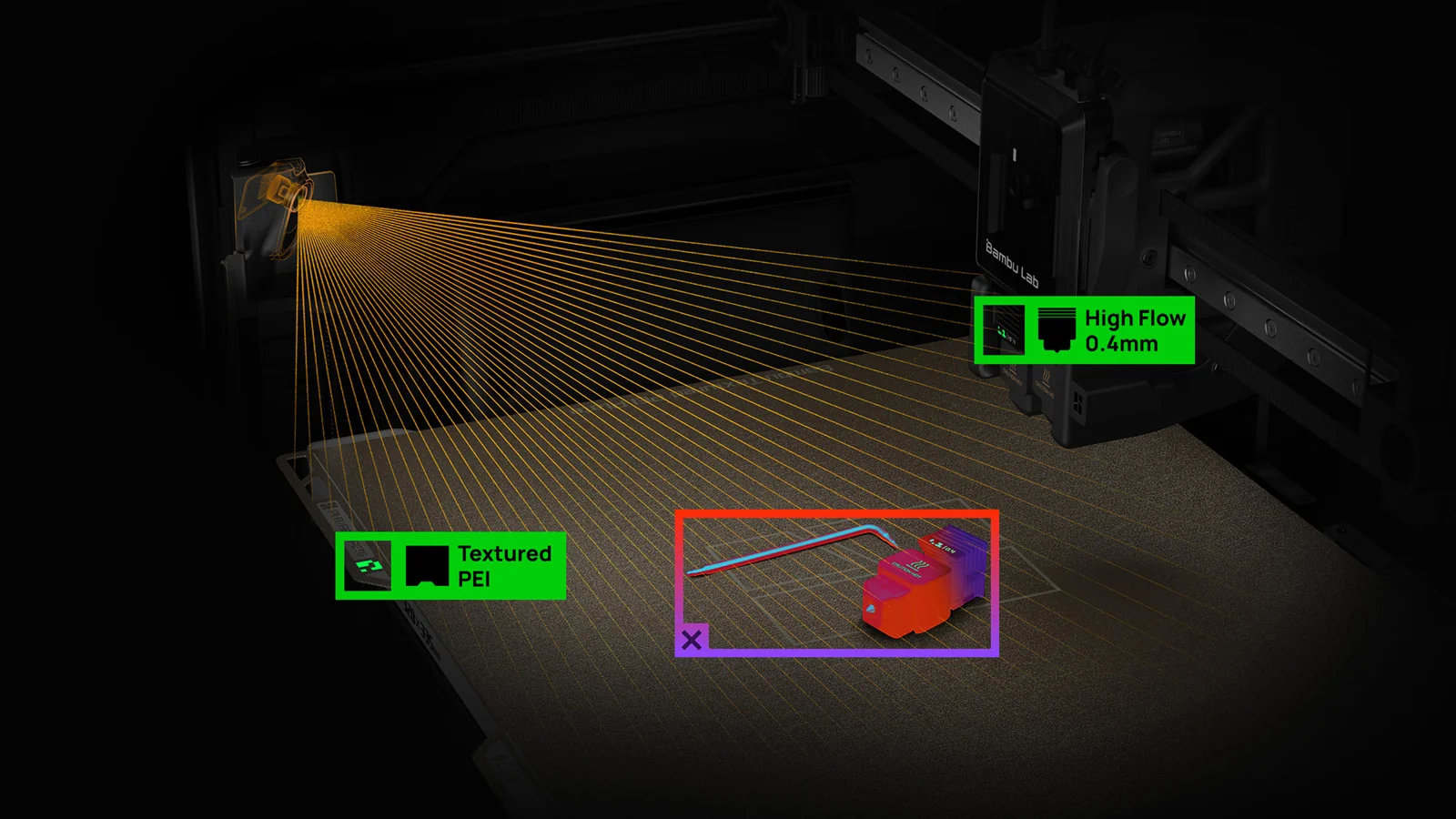
A control panel, not a menu tree.
A 5-inch 720×1280 touchscreen runs the whole machine on-device — jobs, calibration, material profiles and live camera — and the AI nozzle-cam plus BirdsEye camera watch every print for first-layer and spaghetti failures, pausing before a job wastes a plate.
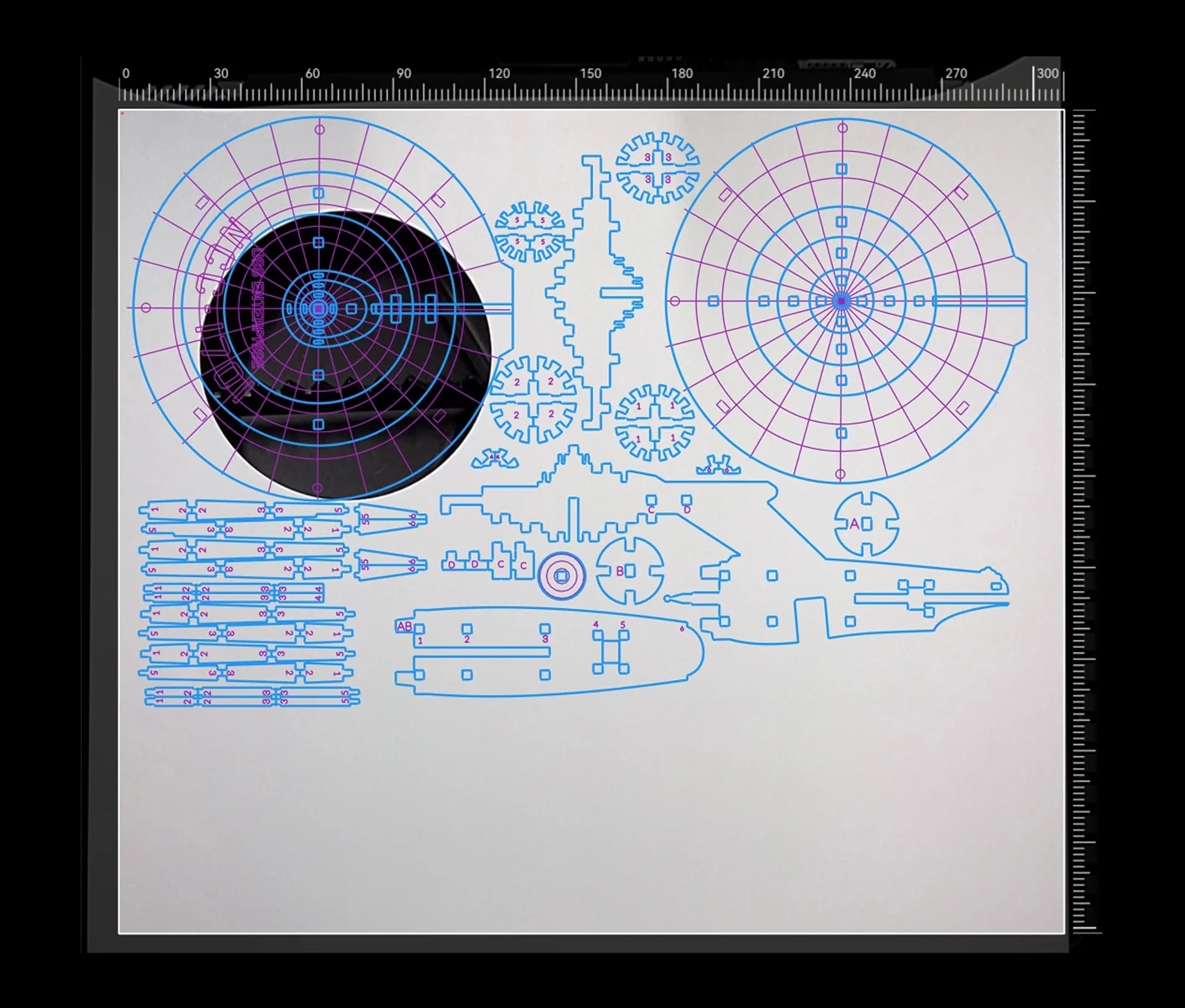
The slicer packs the plate for you.
Bambu Studio auto-orients and nests parts to fit the most on a plate, assigns material and support per object, and syncs the job over Wi-Fi, USB or LAN — including a fully offline LAN-only mode for secure shops.
Four materials on tap — kept dry and fed automatically.
Dry filament in, consistent parts out.
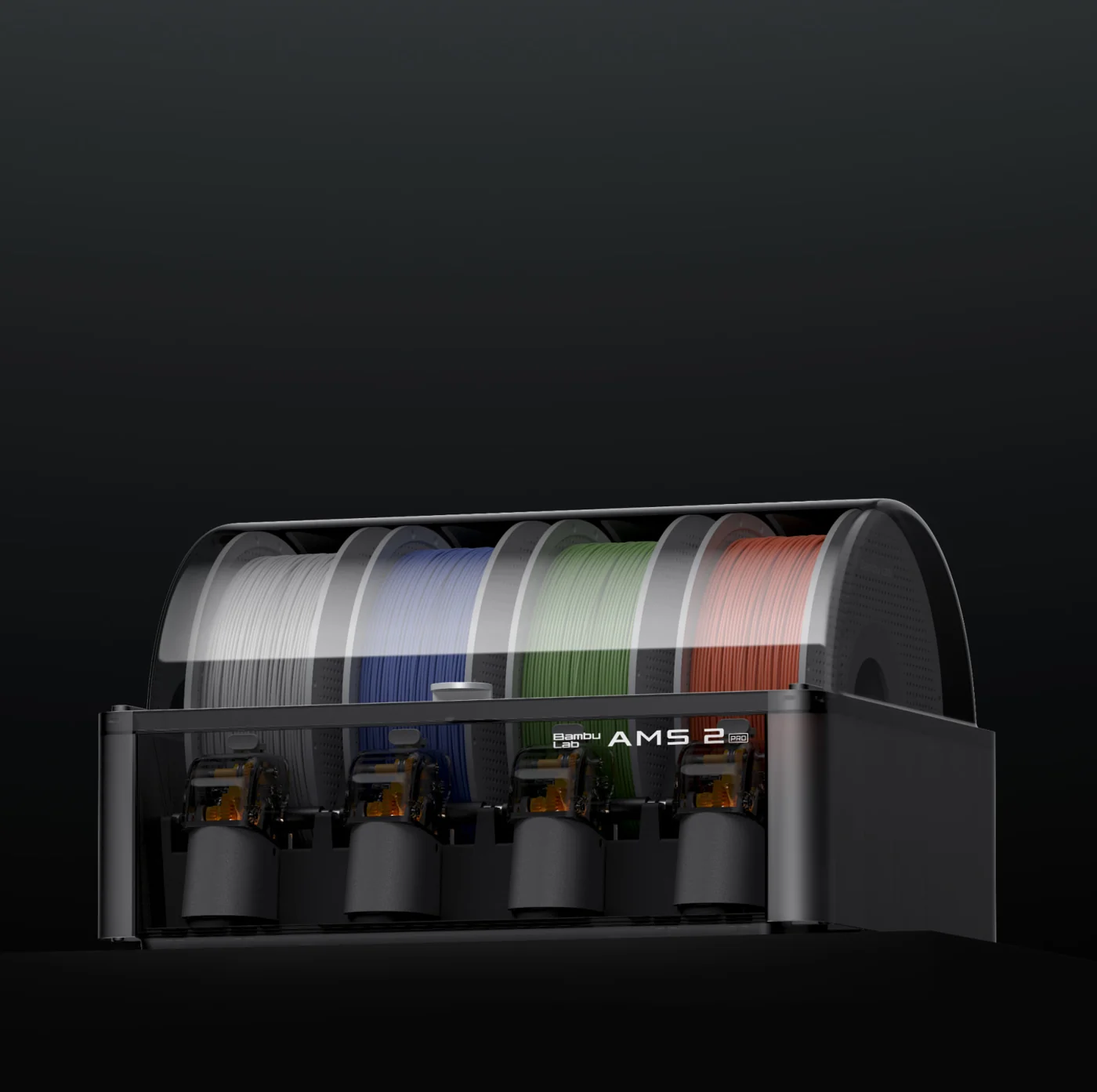
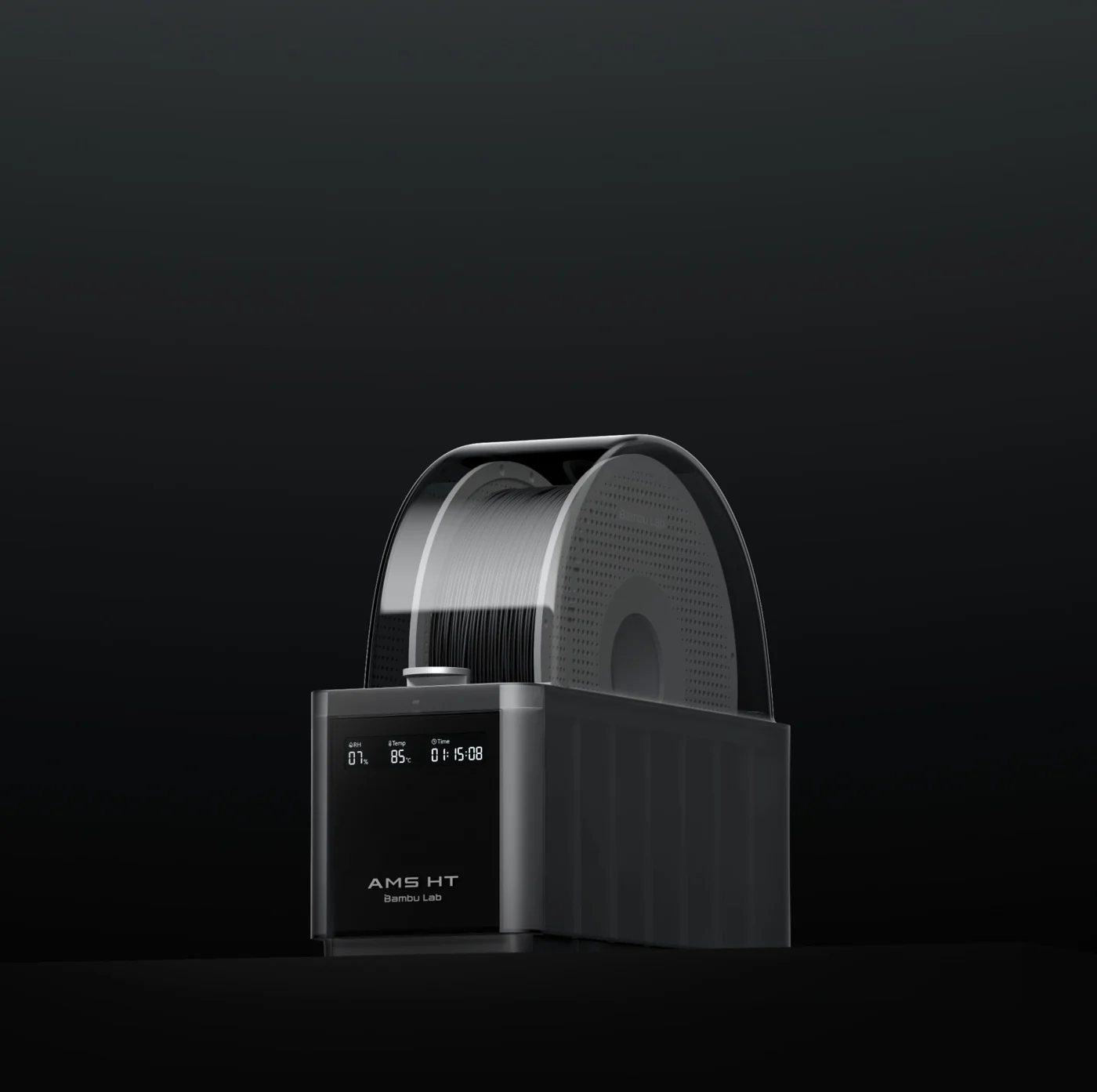
Both multi-material systems ship in the box: the AMS 2 Pro feeds and switches four spools with active drying, and the AMS HT dries to 85°C with a direct bypass for fiber-reinforced filament.
Multi-color and multi-material is only as good as the filament behind it — and most engineering filament fails quietly from moisture long before you see it in a part. The H2D keeps humidity out of the equation: the AMS 2 Pro actively dries the four everyday spools it feeds, while the AMS HT reaches 85°C for the hygroscopic PA, PC and fiber-reinforced materials that lose strength and surface quality the moment they absorb water. Together they mean you can leave engineering filament loaded, walk up, and print a dimensionally-consistent multi-material part without a pre-dry step or a failed first layer. Rev1 helps match AMS configuration to the materials you run most.
From PLA to PPS and carbon fiber.
With 350°C hardened nozzles, a 120°C bed and a 65°C actively heated chamber, the H2D runs the full material spectrum — everyday filaments, warp-prone engineering polymers, and abrasive fiber-reinforced and high-temperature materials. The AMS HT even dries materials to 85°C and offers a bypass path for fiber-reinforced filament. Run genuine Bambu Lab filament for automatic RFID settings, or any standard 1.75 mm spool.
PLA, PETG, TPU, PVA and PET print fast and clean — including soluble PVA support through the second nozzle.
ABS, ASA, PC, PA and PPS run in the warm enclosed chamber that keeps high-temp, warp-prone materials flat and strong.
Hardened nozzles and a high-force servo extruder handle carbon- and glass-reinforced composites for stiff, stable end-use parts.
The second nozzle lays a dedicated support — soluble PVA or breakaway — so internal geometry and overhangs release clean, with no purge tower and no scarring.
The AMS 2 Pro actively dries everyday filament as it feeds, and dries hygroscopic PA, PC and fiber-reinforced spools that lose properties the moment they absorb moisture.
Genuine Bambu Lab filament loads its profile automatically over RFID, and the open 1.75 mm path runs any standard third-party spool — no lock-in.
How the H2D compares.
| Capability | Bambu Lab H2D | Bambu Lab X1-Carbon | Prusa XL (2-tool) |
|---|---|---|---|
| Toolhead | Dual nozzle | Single nozzle | Tool-changer (per-tool) |
| Nozzle temp | 350°C | 300°C | 290°C |
| Laser / cut / plot | Yes — 10W/40W + cutter | No | No |
| Build volume | 325 × 320 × 325 mm | 256³ mm | 360 × 360 × 360 mm |
| Multi-material drying | AMS 2 Pro / HT (85°C) | AMS (no active dry) | MMU / dryer add-on |
| Approx. price | From ~$2,249 | ~$1,449 | ~$3,999+ (2-tool) |
Comparison sourced from published manufacturer data at build time; prices are approximate and vary with promotions, tariffs and bundles (the H2D laser combos are priced higher than the base unit). The H2D’s distinction is a true dual-nozzle toolhead plus integrated laser, cutting and plotting at 350°C on a large enclosed platform — capabilities that otherwise need several separate machines. Choose the X1-Carbon for a smaller, lower-cost single-nozzle flagship, or the H2D when you need dual-material, the highest temps, or the all-in-one laser workshop.
Bambu Lab H2D Technical Data
RESOURCES
Downloads & Technical Support
Everything you need to set up and run your Bambu Lab H2D with confidence.
WHY REV1 TECH
Genuine Bambu Lab Hardware. Additive Manufacturing Specialists.
Rev1 Technologies is an additive-manufacturing supplier headquartered in Auburn Hills, MI, with hands-on expertise across FDM printers, engineering materials and multi-process workflows.
Rev1 Technologies serves engineers, product teams and makers across the USA. We don’t just ship boxes — we help you choose the right H2D configuration, dial in engineering materials and the laser, and keep the machine producing on genuine Bambu Lab hardware and filament.
Bambu Lab H2D questions.
What does the dual-nozzle system actually do?
It gives the H2D two independent hardened hotends with automatic X/Y offset calibration, so you can dedicate one nozzle to your model and the other to support material — soluble or breakaway. That means clean overhangs and complex geometry, no purge tower, and far less waste and color bleed than single-nozzle multi-material printing. You can also run two colors or two materials with crisp interfaces.
Can it really do laser engraving and cutting too?
Yes, with the optional laser module. The 10W laser cuts up to 5 mm of basswood plywood and the 40W up to 15 mm, both using a 455 nm blue-light laser, plus engraving on wood, leather and more. A digital cutting module handles vinyl, paper and leather, and a plotter draws — all on the same enclosed, camera-monitored platform. The laser combos are priced above the base printer; Rev1 can quote the configuration you need.
What materials can it print?
The full range: PLA, PETG, TPU, PVA and PET, plus engineering and high-temp materials like ABS, ASA, PC, PA and PPS, and abrasive carbon- and glass-fiber composites. The 350°C hardened nozzles, 120°C bed and 65°C active chamber, together with the high-force servo extruder, are what make those demanding materials practical.
How big can it print?
325 × 320 × 325 mm in single-nozzle mode, and 300 × 320 × 325 mm when using both nozzles — a large envelope for big parts, tall models and full-plate batches, noticeably bigger than the X1-Carbon.
What is the difference between AMS 2 Pro and AMS HT?
Both add multi-material printing. AMS 2 Pro keeps filament dry with active drying and electromagnetic vents; AMS HT dries materials at up to 85°C and adds a bypass path for fiber-reinforced filament that needs a straighter feed. You can run multiple units for up to 16 colors. Rev1 helps you choose based on the materials you print.
How does it compare to the X1-Carbon?
The X1-Carbon is a superb single-nozzle flagship at a lower price and smaller size. The H2D adds a true dual-nozzle toolhead, higher 350°C nozzles, a larger build, active chamber heating, AMS drying, and the optional laser, cutting and plotting modules. Choose the X1-Carbon for value and a compact footprint; choose the H2D when you need dual-material, the highest temperatures, or the all-in-one laser workshop.
Is it safe to run the laser in a shop or studio?
The H2D laser combo is enclosed and includes air assist and camera monitoring, and Bambu builds in safety interlocks. As with any laser, proper ventilation and safe operation matter — Rev1 advises on the setup, extraction and safety practices your space needs before you run it.
Is the H2D a good machine for a business or production?
Yes — it is built for it. The dual-nozzle toolhead, 350°C engineering thermals and high-flow servo extruder let it produce functional, multi-material and fiber-reinforced parts at speed, while AMS drying keeps results consistent across long runs. Cloud and app fleet control, AI failure detection and the all-in-one laser and cutting modules make it efficient for product studios, prototyping labs and small-batch manufacturing. Rev1 offers multi-unit pricing and setup support to bring a production cell online smoothly.
How does Rev1 support the purchase?
Rev1 ships genuine, fully-assembled Bambu Lab hardware from US stock, helps you choose the right H2D bundle, laser and materials, and supports setup, slicing and troubleshooting. Multi-unit and education pricing and Klarna are available for larger orders.