CarbonX PLA+CF • 3DXTECH • REV1 TECH
3DXTech CarbonX™ PLA+CF Eco-Friendly CF-PLA for Rapid Structural Prototyping -- $35/750g
Eco-Friendly CF-PLA — $35/750g · 4,950 MPa Modulus · Prints on Any FDM Printer
3DXTech’s CarbonX PLA+CF pairs bio-based PLA with recycled carbon fiber — delivering 4,950 MPa tensile modulus at the lowest price in the entire CarbonX CF line. No heated bed required. No chamber required. Prints on any FDM printer with a hardened steel nozzle. Made in Grand Rapids, Michigan.
Select Spool Size
750g in stock. Contact Rev1 to confirm availability.
WHY CarbonX PLA+CF
Lowest-Cost CF. Recycled Fiber. Bio-Based PLA. Prints Anywhere.
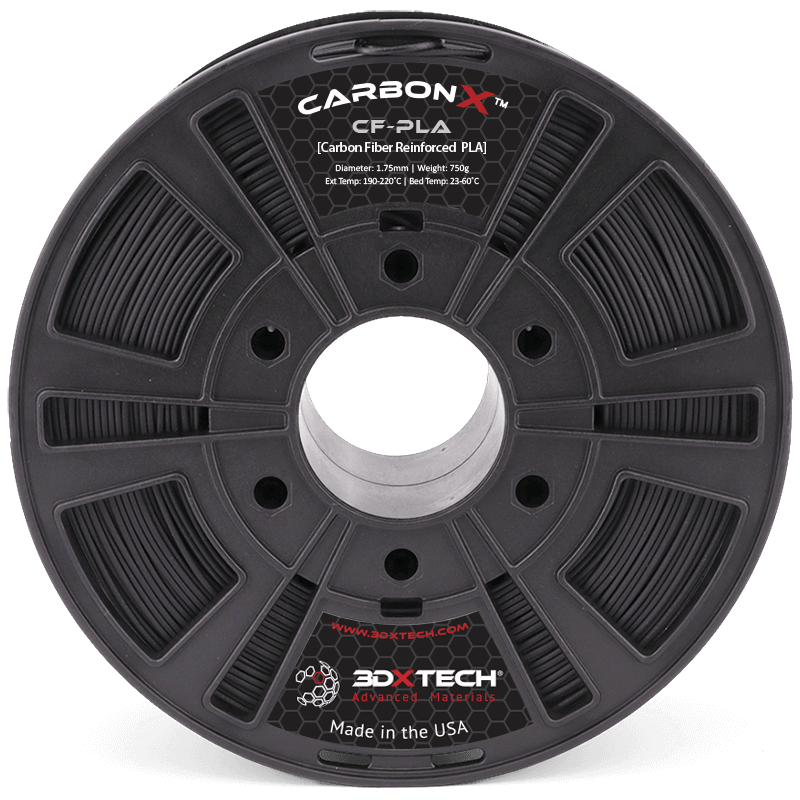
CarbonX™ PLA+CF is 3DXTech’s most accessible CF filament — $35 per 750g spool makes it the cheapest CF option in the line. Recycled carbon fiber reinforces bio-based PLA for a sustainable CF choice. No heated bed required, no chamber needed. Prints on any open FDM platform with a hardened steel nozzle. Made in Grand Rapids, Michigan.
$35/750g — Cheapest CF Option
At $35 per 750g spool, CarbonX PLA+CF is the lowest-cost CF filament in the 3DXTech CarbonX line — and one of the lowest-cost verified CF filaments on the market. Real TDS-backed 4,950 MPa modulus at entry-level price.
Recycled CF + Bio-Based PLA
Recycled carbon fiber reinforcement paired with a bio-based PLA resin — the most sustainable CF filament in the CarbonX line. Lower embodied carbon than virgin CF + petroleum PLA alternatives while maintaining competitive mechanical performance.
Prints on Any FDM Printer
No heated bed required (prints at 23–60°C bed or cold). No heated chamber needed. 205–225°C extrusion temp is standard PLA range. Any FDM platform from consumer desktop to industrial open-source handles this material — with a hardened steel nozzle upgrade.
4,950 MPa Tensile Modulus
Recycled CF loading delivers 4,950 MPa tensile modulus — a significant step above unfilled PLA (~3,500 MPa) and typical generic CF-PLA alternatives with unverified CF loading. ISO 527 tested on 1.75mm black filament at 3DXTech’s Michigan facility.
PRINTING WITH CarbonX PLA+CF
PLA-Class Processing. CF-Class Stiffness. Zero Platform Requirements.
CarbonX PLA+CF is engineered to print on any FDM platform — standard PLA processing temps, no heated bed requirement, no enclosed chamber. The lowest-barrier CF filament available. One critical caveat: Tg is 60°C — position parts away from heat sources. Hardened steel nozzle ≥0.4mm mandatory.
- Extruder Temp 205–225°C — standard PLA temperature range; compatible with standard hot ends; no all-metal hot end required
- Bed Temp 23–60°C — no heated bed required; room-temperature glass, PEI, or smooth build plate surface; standard PLA adhesion protocols apply
- Enclosure Not required — open FDM compatible; PLA processes well in open air environments on any desktop platform
- Nozzle Hardened steel ≥0.4mm MANDATORY — carbon fiber is abrasive and will wear brass nozzles rapidly regardless of low print temperature
- LOW Tg WARNING Tg is 60°C — NOT suitable for hot environments (car interiors, direct sun exposure, near heat sources). Position as rapid prototyping and development use. HDT 91°C is surprisingly good due to CF crystallization effect, but continuous service above 50°C is not recommended.
- Drying 55°C / 4 hours before printing — PLA absorbs moisture; dry before print sessions for best surface quality and layer adhesion
THERMAL DATA
60°C Tg — Rapid Prototyping Range. 91°C HDT Surprises.
Understand the thermal envelope before specifying CarbonX™ PLA+CF. The 60°C Tg limits hot-environment use; the 91°C HDT is remarkably good for a PLA due to CF acting as a crystallization nucleant. Four thermal milestones — verified against 3DXTech CarbonX PLA+CF TDS.
Low Tg for a CF-reinforced grade. Parts will begin to soften above 60°C — not suitable for car interiors, direct sun, or near heat sources. Designed for rapid prototyping and development, not continuous elevated-temperature service.
Surprisingly strong HDT for a PLA base — significantly above Tg due to carbon fiber acting as a crystallization nucleant in the PLA matrix. Unfilled PLA HDT is typically ~50°C. The CF loading enables an 80% HDT improvement.
Standard PLA temperature range — the widest compatibility in the CarbonX line. Prints on any FDM hot end. No all-metal hot end required. Lower entry barrier vs. CarbonX ABS+CF (230–260°C + chamber) or PC+CF (280–310°C).
Dry at 55°C for 4 hours before printing. PLA absorbs ambient moisture; wet filament shows rough surface texture and reduced layer adhesion. Standard filament dryer or food dehydrator at correct temperature is sufficient.
APPLICATIONS
Rapid Structural Prototypes. Development Parts. Low-Cost CF Iteration.
CarbonX™ PLA+CF is optimized for rapid prototyping workflows where cost and accessibility matter most. 4,950 MPa modulus delivers real CF stiffness for development-phase structural evaluation — at the lowest price in the CarbonX line. Not recommended for hot environments above 50°C continuous service.
Rapid Structural Prototyping
Development-phase parts needing CF stiffness at low per-unit cost. 4,950 MPa modulus validates structural geometry before committing to higher-cost CF materials like ABS+CF or PC+CF. Same-day print-and-evaluate with standard PLA settings.
Functional Fixtures (Ambient Temp)
Jigs, fixtures, and inspection tooling used at room temperature. CF stiffness reduces fixture flex for dimensional checking and assembly aids. Low Tg limits use to ambient-temperature applications — not for heated process environments.
Sustainable CF Prototyping
Sustainability-conscious development workflows. Recycled CF + bio-based PLA makes this the most environmentally responsible CF choice in the CarbonX line. Suitable for programs requiring lower embodied carbon in prototype materials.
Hardened steel nozzle ≥0.4mm mandatory. Tg 60°C — not for elevated-temperature applications. Consult 3DXTech CarbonX PLA+CF TDS for complete mechanical data and test methodology.
SPECIFICATIONS
CarbonX™ PLA+CF — Full Technical Data
Source: 3DXTech CarbonX PLA+CF TDS. ISO-standard test specimens. 1.75mm black filament.
Material Properties
| Polymer | Bio-based PLA + Recycled Chopped Carbon Fiber |
| Diameter | 1.75mm |
| Color | Black |
| Glass Transition (Tg) | 60°C (DSC) — LOW; not for heat environments |
| HDT (0.45 MPa, ISO 75) | 91°C (CF crystallization effect) |
| Density | 1.29 g/cc (ISO 1183) |
| Tensile Strength | 48 MPa (ISO 527) |
| Tensile Modulus | 4,950 MPa (ISO 527) |
| Tensile Elongation | 2% (ISO 527) |
| Flexural Strength | 89 MPa (ISO 178) |
| Flexural Modulus | 6,320 MPa (ISO 178) |
| Surface Resistance | >10⁹ Ω/sq (standard CF -- non-ESD) |
Print Parameters
| Extruder Temp | 205–225°C |
| Bed Temp | 23–60°C (no heated bed required) |
| Enclosure | Not required (any open FDM platform) |
| Drying Protocol | 55°C / 4 hours |
| Nozzle | Hardened steel ≥0.4mm (MANDATORY) |
| Layer Height | 0.2mm or higher |
Availability
| 750g / 1.75mm | $35 (in stock) |
| 2kg / 1.75mm | Contact (MOQ-10) |
| 2.85mm | Contact for availability |
| SKU | 3DXT-CX-PLACF-175-750 |
| Origin | Grand Rapids, MI, USA |
SPOOL SELECTION
750g In Stock. $35. Black. 1.75mm.
CarbonX™ PLA+CF is available in 750g Black (1.75mm) at $35 from stock — the only size and the lowest-priced CF filament in the CarbonX line. 2kg spools available by special order (MOQ-10).
- 1.75mm diameter — Black
- Recycled CF + bio-based PLA
- Ships from stock
- 1.75mm diameter — Black
- MOQ-10 spools per brand policy
- Contact Rev1 for lead time
PRODUCT IMAGES
CarbonX™ PLA+CF — Spool & Printed Part Views
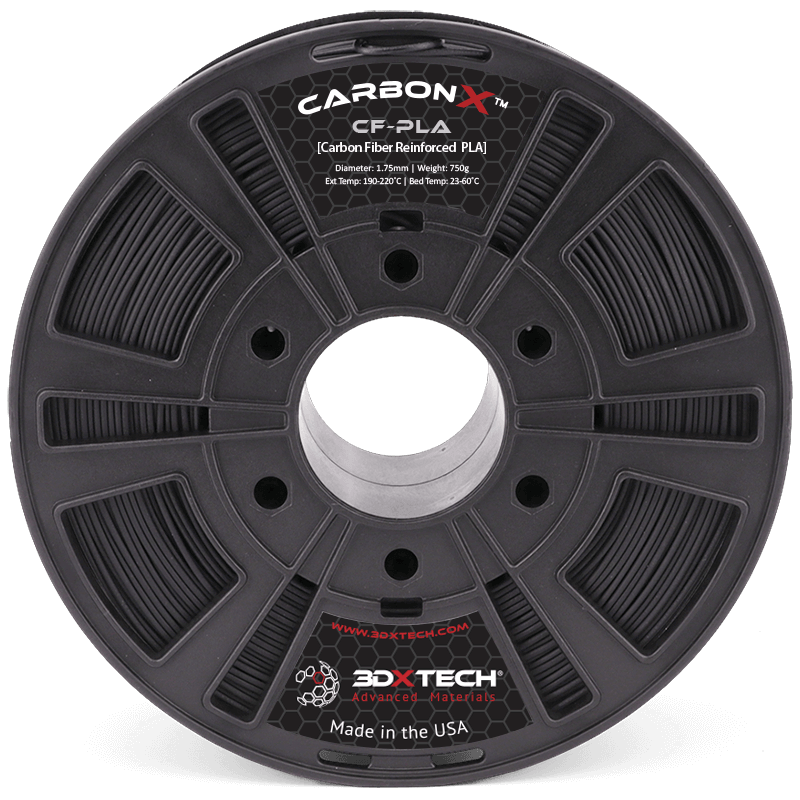
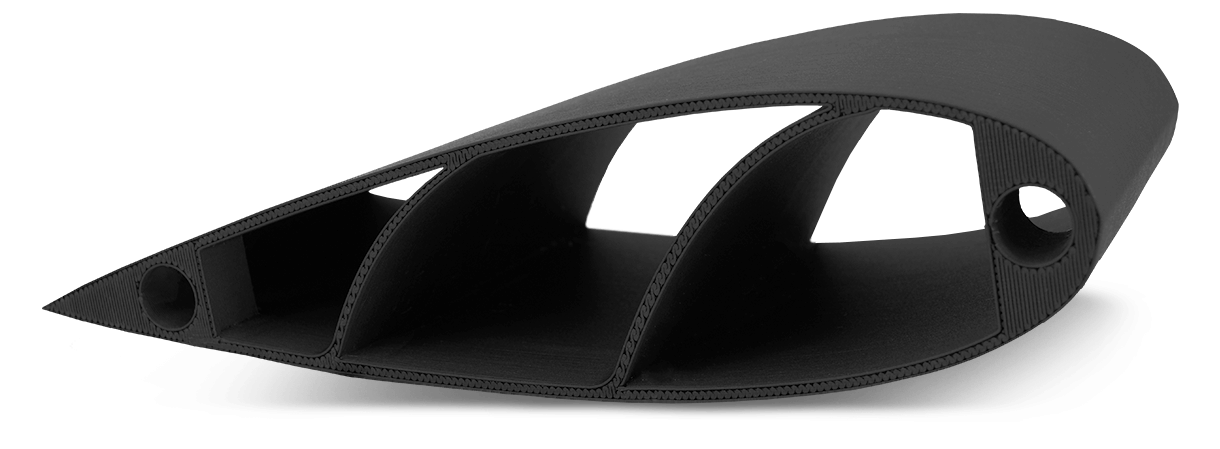
750g Black spool, 1.75mm. Recycled CF reinforcement produces consistent black color throughout. Hardened steel nozzle required.
WHERE IT WORKS
Where Low-Cost Bio-CF PLA Outperforms Standard Alternatives
When you need CF stiffness above unfilled PLA at minimum cost and maximum platform accessibility — and temperature requirements stay below 50°C continuous service. CarbonX PLA+CF delivers 4,950 MPa modulus at $35/750g with zero hardware requirements beyond a hardened nozzle.
Rapid Development Prototypes
High-iteration structural geometry validation where per-unit cost drives iteration rate. 4,950 MPa modulus gives useful stiffness feedback at PLA prices. Print same-day on any desktop FDM — no platform configuration changes required.
Lightweight Structural Brackets (Ambient)
End-use structural brackets and mounts for ambient-temperature applications. CF stiffness reduces bracket flex for mounting, clamping, and assembly applications. 1.29 g/cc density — lighter than most engineering CF-polymer grades.
Educational & Maker CF Projects
First CF filament for educational or maker programs. Familiar PLA processing — no new hardware needed except a hardened nozzle — makes this a low-risk introduction to CF filament printing for shops already running standard PLA workflows.
Consumer Product Prototyping
Consumer product housings and enclosures where structural feedback matters before tooling decisions. CF matte finish and consistent black color simulate production CF-composite aesthetics for design review and customer presentations.
Sustainability-Driven Prototyping
Programs tracking embodied carbon in prototype materials. Recycled CF + bio-PLA represents a documented step down in environmental impact vs. virgin CF + petroleum-derived base resin. Suitable for green procurement reporting requirements.
CF Slicer Profile Development
Profile tuning and printer qualification for CF filament workflows. Lower cost per spool means more test prints before upgrading to CarbonX ABS+CF or PC+CF for final functional validation — especially useful for teams new to CF materials.
MATERIAL CARE
Dry Before Printing. Store Sealed. Print With Confidence.
CarbonX™ PLA+CF requires drying at 55°C for 4 hours before printing. Bio-based PLA absorbs ambient moisture. Follow this protocol to maintain print quality and mechanical properties session-to-session.
Dry Before Every Session
55°C for 4 hours minimum. Even a sealed spool benefits from a fresh drying cycle. Wet PLA+CF shows rough surface texture and reduced layer adhesion. Standard filament dryer or food dehydrator works well at this temperature.
Print From the Dryer
For best results, print directly from a heated dry-box. Ambient humidity gradually re-absorbs into the filament during extended print runs. This is especially important in humid climates or air-conditioned environments with moisture swings.
Store Sealed With Desiccant
Return unused filament to an airtight bag or container with fresh desiccant immediately after printing. Bio-based PLA is more hygroscopic than some petroleum-derived PLA grades — sealed storage is essential for multi-session use.
Recognize Wet Filament Symptoms
Popping or crackling during extrusion, rough surface texture, reduced layer adhesion, and inconsistent extrusion width are signs of moisture contamination. Re-dry at 55°C for 4 hours and restart the print.
HOW IT COMPARES
CarbonX™ PLA+CF vs. Commonly Evaluated Alternatives
Buyers evaluating CarbonX PLA+CF typically compare against CarbonX ABS+CF for a higher-temperature CF option, CarbonX ASA+CF for outdoor UV-stable CF, and generic CF PLA alternatives with unverified specs. PLA+CF uniquely combines the lowest price, highest platform accessibility, and sustainability credentials.
3DXTech / Rev1 Tech
3DXTech
3DXTech
Various
MATERIAL PERFORMANCE PROFILE
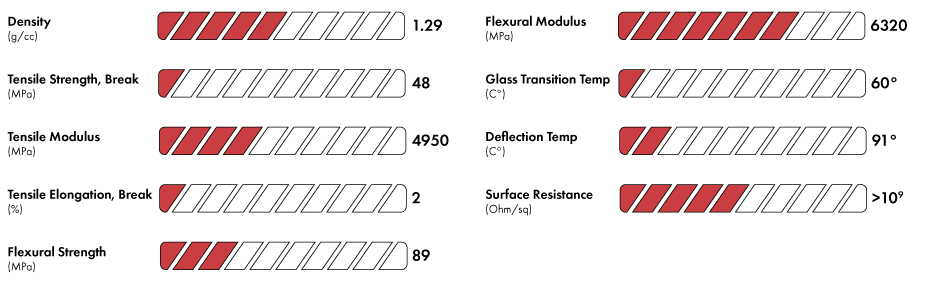
CarbonX™ PLA+CF — Relative Property Scale
Nine-bar relative scale. Reference maximum: ThermaX PEEK at ~11,000 MPa tensile modulus = 100 bars. Values per ISO 527 / ISO 178 / ISO 75 / ISO 1183 on 3DXTech CarbonX PLA+CF TDS.
Recycled CF + Bio-Based PLA
The most sustainable CF filament in the CarbonX line. Recycled carbon fiber and bio-based polylactic acid reduce embodied carbon vs. virgin CF + petroleum PLA alternatives. 3DXTech quality controls maintain consistent recycled CF loading across lots.
Made in Grand Rapids, MI
Filament extruded and wound in-house at 3DXTech’s Michigan facility. Direct factory quality control — not overseas commodity production. ISO 9001:2015 certified quality management system.
Technical Data Sheet Available
Full processing parameters, mechanical properties, and test methodology published in the CarbonX PLA+CF TDS. Available via 3DXTech. Contact Rev1 for pre-sales technical support and application qualification.
RESOURCES
Downloads & Technical Support
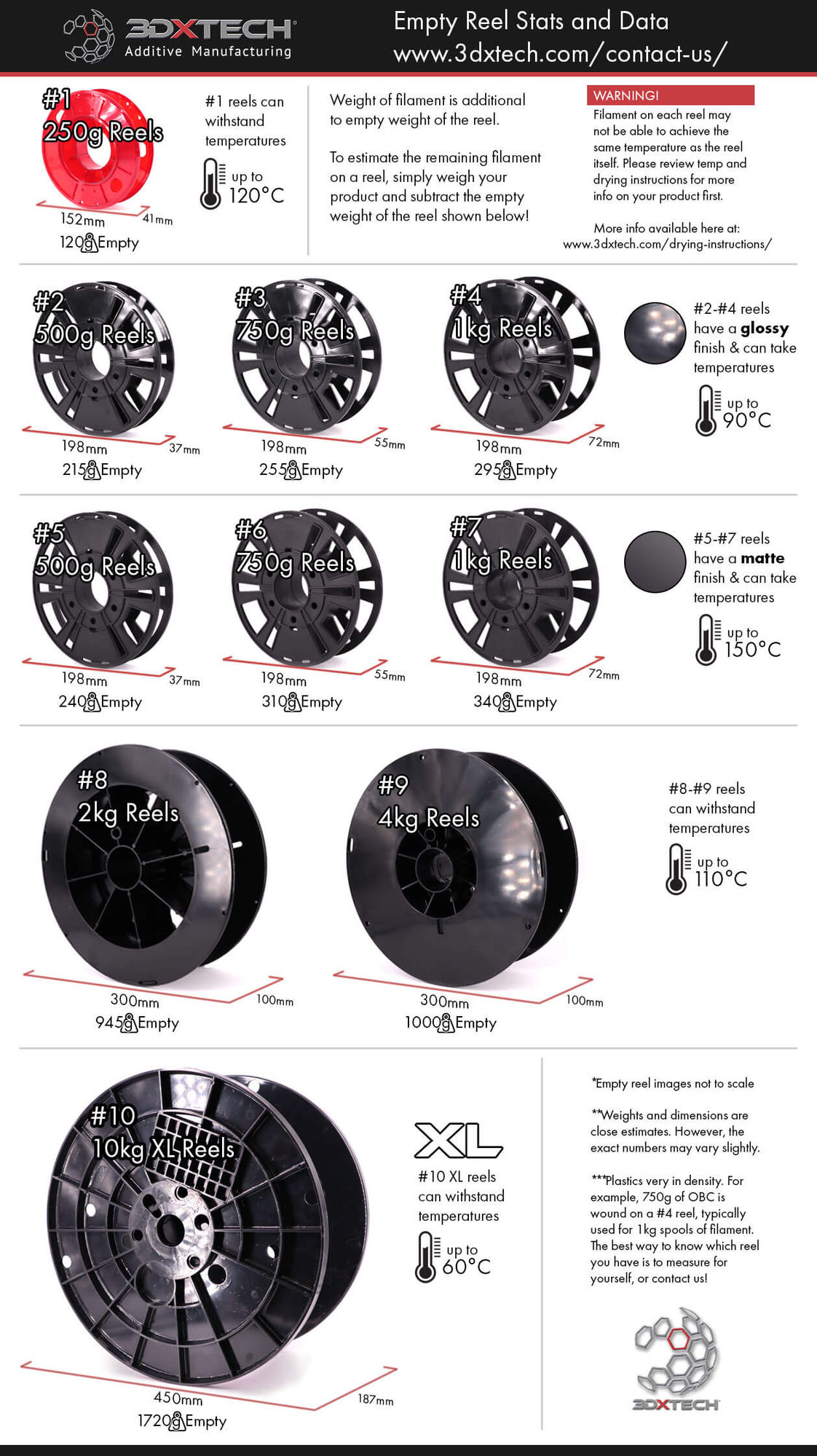
Everything you need to qualify and print CarbonX™ PLA+CF with confidence. Processing parameters, reel dimensions, and technical support from Rev1.
WHY REV1 TECH
Authorized 3DXTech Reseller. Industrial AM Specialists.
Rev1 Technologies is an authorized 3DXTech reseller headquartered in Auburn Hills, MI, with direct technical expertise in high-performance FFF materials and the printers that run them. CarbonX PLA+CF prints at 205–225°C with no bed or chamber requirement — compatible with Bambu, Creality, Prusa, and any open FDM platform with a hardened steel nozzle upgrade.
Authorized Reseller
Every spool ships direct from the authorized channel. MAP pricing guaranteed. Single-channel license compliance — not a grey-market distributor. Authentic 3DXTech product with lot traceability.
Any FDM Platform
No heated bed, no chamber — PLA+CF runs on Bambu, Creality, Prusa, and virtually any modern FDM printer with a hardened steel nozzle upgrade. Our team can guide hardened nozzle sourcing and profile setup for your specific platform.
Pre-Sales Technical Support
Questions about print settings, application suitability (especially the low-Tg caveat), or qualifying PLA+CF for your program? Contact Rev1 before you order — that conversation is free.
FREQUENTLY ASKED
CarbonX™ PLA+CF — Buyer & Engineer Questions Answered
What is CarbonX™ PLA+CF?
CarbonX™ PLA+CF is 3DXTech’s bio-based PLA filament reinforced with recycled chopped carbon fiber. Available in Black (1.75mm, 750g at $35), it delivers 4,950 MPa tensile modulus and 48 MPa tensile strength. No heated bed required, no chamber needed — prints on any FDM printer. Hardened steel nozzle ≥0.4mm mandatory. Made in Grand Rapids, Michigan.
What mechanical properties does CarbonX PLA+CF deliver?
CarbonX PLA+CF delivers 48 MPa tensile strength, 4,950 MPa tensile modulus, 89 MPa flexural strength, and 6,320 MPa flexural modulus at 2% elongation. Glass transition (Tg) is 60°C and HDT is 91°C at 0.45 MPa. Density is 1.29 g/cc. All values per ISO 527 / ISO 178 on 1.75mm black filament.
Does CarbonX PLA+CF require a heated bed or enclosure?
No — this is the key platform advantage of PLA+CF. No heated bed is required (bed temp 23–60°C, or completely cold). No heated enclosure needed. Standard PLA print settings apply. This makes PLA+CF the most accessible CF filament in the CarbonX line — compatible with any FDM printer that can accept a hardened steel nozzle.
What is the Tg of CarbonX PLA+CF and does it matter?
The glass transition (Tg) is 60°C — this is a critical caveat. Parts will begin to soften above 60°C; avoid use in car interiors, direct sun exposure, or near heat sources. The HDT (91°C) is significantly higher due to carbon fiber acting as a crystallization nucleant, but continuous service above 50°C is not recommended. PLA+CF is positioned for rapid prototyping and development at ambient temperature.
What are the print settings for CarbonX PLA+CF?
Extruder: 205–225°C. Bed: 23–60°C (no heated bed required). Enclosure: not required. Nozzle: hardened steel ≥0.4mm mandatory. Layer height: 0.2mm or higher. Drying: 55°C for 4 hours before every print session. Standard PLA FDM profile applies as a starting point.
Why is the flexural modulus (6,320 MPa) higher than the tensile modulus (4,950 MPa)?
This is a carbon fiber orientation effect. During FFF extrusion, CF fibers align along the flow direction (X/Y). Flexural testing loads the specimen in a way that recruits more fiber reinforcement in the outer layers, producing a higher effective modulus in bending vs. pure uniaxial tension. Both values are ISO-tested and accurate — select the relevant property for your load case.
How does CarbonX PLA+CF compare to CarbonX ABS+CF?
PLA+CF is lower temperature (205–225°C vs. 230–260°C), requires no heated bed or chamber (vs. recommended for ABS+CF), and costs significantly less ($35 vs. ~$48 per 750g). ABS+CF delivers much higher Tg (~108°C vs. 60°C) and higher tensile modulus. Choose PLA+CF for cost, accessibility, and sustainability; choose ABS+CF when elevated temperature performance is required.
Is CarbonX PLA+CF a sustainable CF filament option?
Yes — CarbonX PLA+CF is 3DXTech’s most sustainable CF filament. It uses recycled carbon fiber (diverting CF waste from landfill) and a bio-based PLA resin (reduced petroleum feedstock). For programs tracking embodied carbon in prototype materials or requiring green procurement documentation, this is the preferred CF option in the CarbonX line. Made in Grand Rapids, Michigan by 3DXTech under ISO 9001:2015 certification.