3DXTech CarbonXPEKK-A+CF15Carbon-Fiber PEKK-A — Aerospace-Grade PAEK Strength, Stiffness & Heat
A high-modulus carbon-fiber PAEK for the most demanding, high-temperature parts.
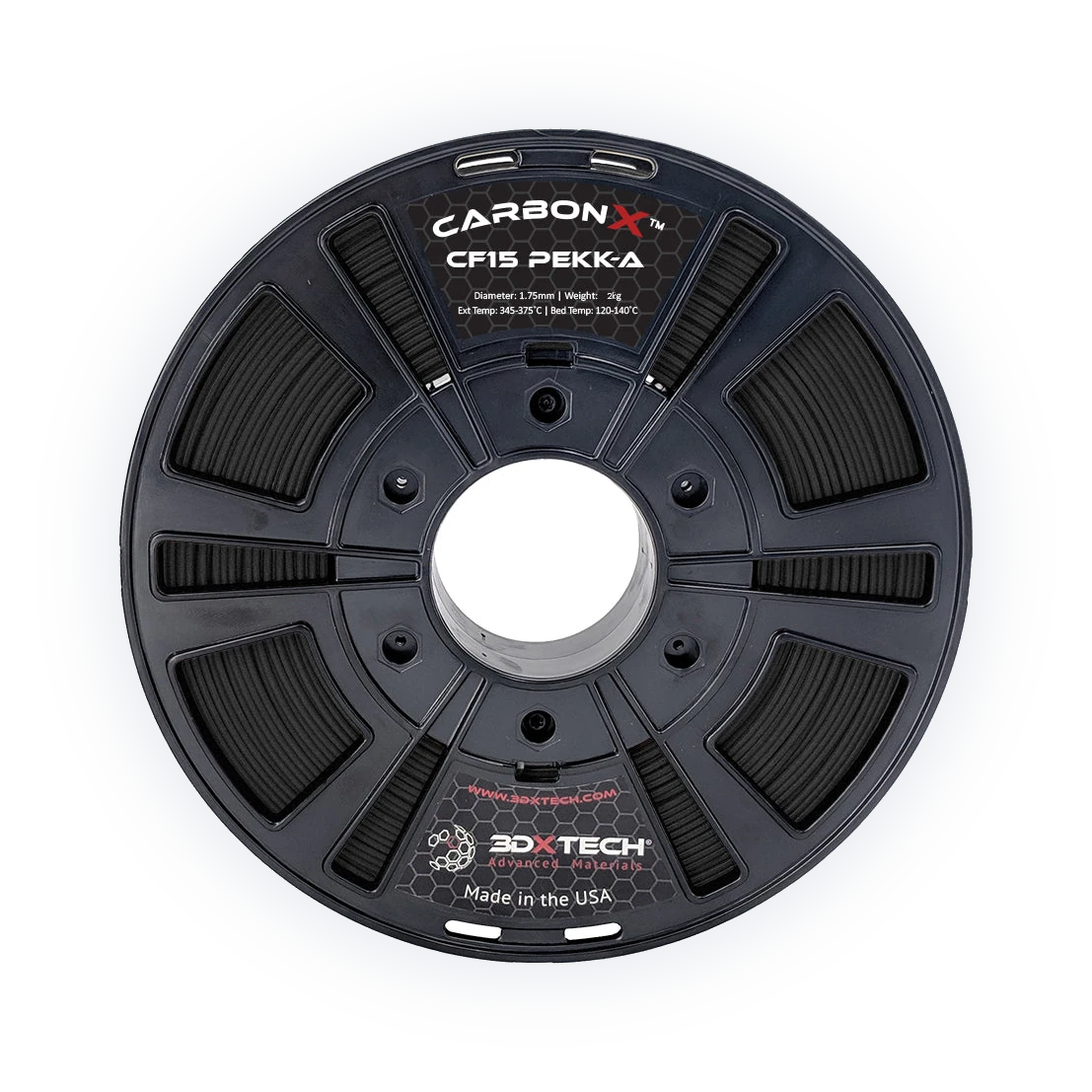
3DXTech CarbonX™ PEKK-A+CF15 is made from PEKK (a 60/40 PolyEtherKetoneKetone copolymer) reinforced with 15% high-modulus chopped carbon fiber. A leading material in the PAEK family, it offers exceptional mechanical, thermal, and chemical performance with an outstanding strength-to-weight ratio — a true metal-replacement material for aerospace, defense, and industrial applications. Made in the USA. Full specifications →
Genuine 3DXTech material, ships from Rev1. Need another color, diameter, or volume pricing? Call (248) 707-2950.
USA-made CarbonX PEKK-A filament, engineered for real applications.
3DXTech manufactures CarbonX CarbonX PEKK-A in Grand Rapids, Michigan. Rev1 Technologies is your authorized 3DXTech reseller and US support partner in Auburn Hills, Michigan — ask us for the current data sheet.

Genuine CarbonX CarbonX PEKK-A — on a Rev1-supported spool.
3DXTech CarbonX™ PEKK-A+CF15 is made from PEKK (a 60/40 PolyEtherKetoneKetone copolymer) reinforced with 15% high-modulus chopped carbon fiber. A leading material in the PAEK family, it offers exceptional mechanical, thermal, and chemical performance with an outstanding strength-to-weight ratio — a true metal-replacement material for aerospace, defense, and industrial applications.
USA-made, traceable, and supported by Rev1.
The real material — not grey-market filament of unknown origin.
Every spool is authentic 3DXTech material, manufactured in their 68,000 sq-ft Grand Rapids, Michigan facility. Rev1 Technologies is an authorized 3DXTech reseller and US support partner — we help you choose the right grade, dial in your printer, and keep production running. Choose your color, diameter, and reel size below.
A high-modulus carbon-fiber PAEK for the most demanding, high-temperature parts.
Full mechanical data for CarbonX CarbonX PEKK-A is available from Rev1 on request.
15% high-modulus chopped carbon fiber for exceptional stiffness and dimensional stability.
A high-performance PAEK — withstands sustained high-temperature service.
Outstanding strength-to-weight ratio for lightweighting metal parts.
Excellent resistance to fuels, solvents, and aggressive chemicals.
Low warp and creep under load and heat, thanks to the CF reinforcement.
PAEK chemistry suited to aerospace flame-smoke-toxicity and low-outgassing requirements.
Dial it in — and print with confidence.
Guidance for printing CarbonX PEKK-A. Request the technical data sheet from Rev1 for exact temperatures and settings.
Vendor spool guidance — requires a high-temp all-metal hotend with a hardened nozzle.
Vendor spool guidance; an actively-heated chamber is strongly recommended.
Carbon fiber is abrasive — use a hardened-steel or ruby nozzle.
CarbonX PEKK-A in the real world.
Typical applications for PEKK-A + 15% Carbon Fiber (PolyEtherKetoneKetone).
Why choose CarbonX PEKK-A?
How CarbonX CarbonX PEKK-A compares to CarbonX PEEK+CF. Request the full data sheet for exact figures.
| CarbonX PEKK-A | CarbonX PEEK+CF | |
|---|---|---|
| Family | PAEK (PEKK-A) | PAEK (PEEK) |
| Printability | Easier than PEEK | Hardest |
| Heat resistance | Very high | Highest |
| Reinforcement | 15% carbon fiber | Carbon fiber |
Comparative summary for guidance; request the CarbonX CarbonX PEKK-A data sheet for exact properties. Prices vary by color, diameter, and date.
3DXTech CarbonX CarbonX PEKK-A — Product Data
Product data below. Full mechanical and thermal data is available —
RESOURCES
Data Sheet & Printing Support
Everything you need to run CarbonX CarbonX PEKK-A.
WHY REV1 TECH
Authorized 3DXTech Reseller. Engineering-Materials Specialists.
Rev1 Technologies is an authorized 3DXTech reseller in Auburn Hills, MI, supplying genuine USA-made material with real support.
We help you pick the right grade, dial in your printer, and keep production running.
FAQ
3DXTech CarbonX PEKK-A — Common Questions
What is CarbonX PEKK-A?
3DXTech CarbonX™ PEKK-A+CF15 is made from PEKK (a 60/40 PolyEtherKetoneKetone copolymer) reinforced with 15% high-modulus chopped carbon fiber. A leading material in the PAEK family, it offers exceptional mechanical, thermal, and chemical performance with an outstanding strength-to-weight ratio — a true metal-replacement material for aerospace, defense, and industrial applications.
What printer do I need for PEKK-A+CF?
A high-temperature machine: an all-metal hotend capable of 345–375°C, a hardened nozzle (the carbon fiber is abrasive), a high-temp bed, and ideally an actively-heated chamber. It is an industrial material, not for desktop printers.
What colors, diameters, and sizes are available?
Colors: Black. Diameters: 1.75mm. Reel size: 250 g / 750 g / 2 kg. Ask us about other options and volume pricing.
Where can I get the mechanical data?
The full CarbonX CarbonX PEKK-A technical data sheet is available from Rev1 on request — use any “Request the TDS” button on this page.
Is it made in the USA?
Yes — 3DXTech manufactures its filaments in a 68,000 sq-ft facility in Grand Rapids, Michigan.
Is it genuine 3DXTech material?
Yes — Rev1 Technologies is an authorized 3DXTech reseller. Every spool is authentic, USA-made 3DXTech material with real support.
Matte carbon-fiber black — one diameter, three reel sizes.
CarbonX PEKK-A+CF15 ships in a single, purpose-built color: a deep matte carbon-fiber black that shows off the fiber-loaded surface this aerospace grade is known for. Carbon fiber is inherently black — there are no other color options for this material. It's available in 1.75 mm on 250 g, 750 g, and 2 kg reels; start with a 250 g or 750 g spool to dial in your high-temp profile, then scale up. The 750 g reel fits the size envelope of popular automated material systems like the Bambu AMS, Creality CFS, and Anycubic ACE Pro — though a high-temp material like PEKK-A is best run from a heated dry box. The 2 kg reel is a special order with a 10-unit minimum — choose your reel in the buy-box, or ask us about aerospace bulk and standing-order pricing.
Check the reel fits your printer.
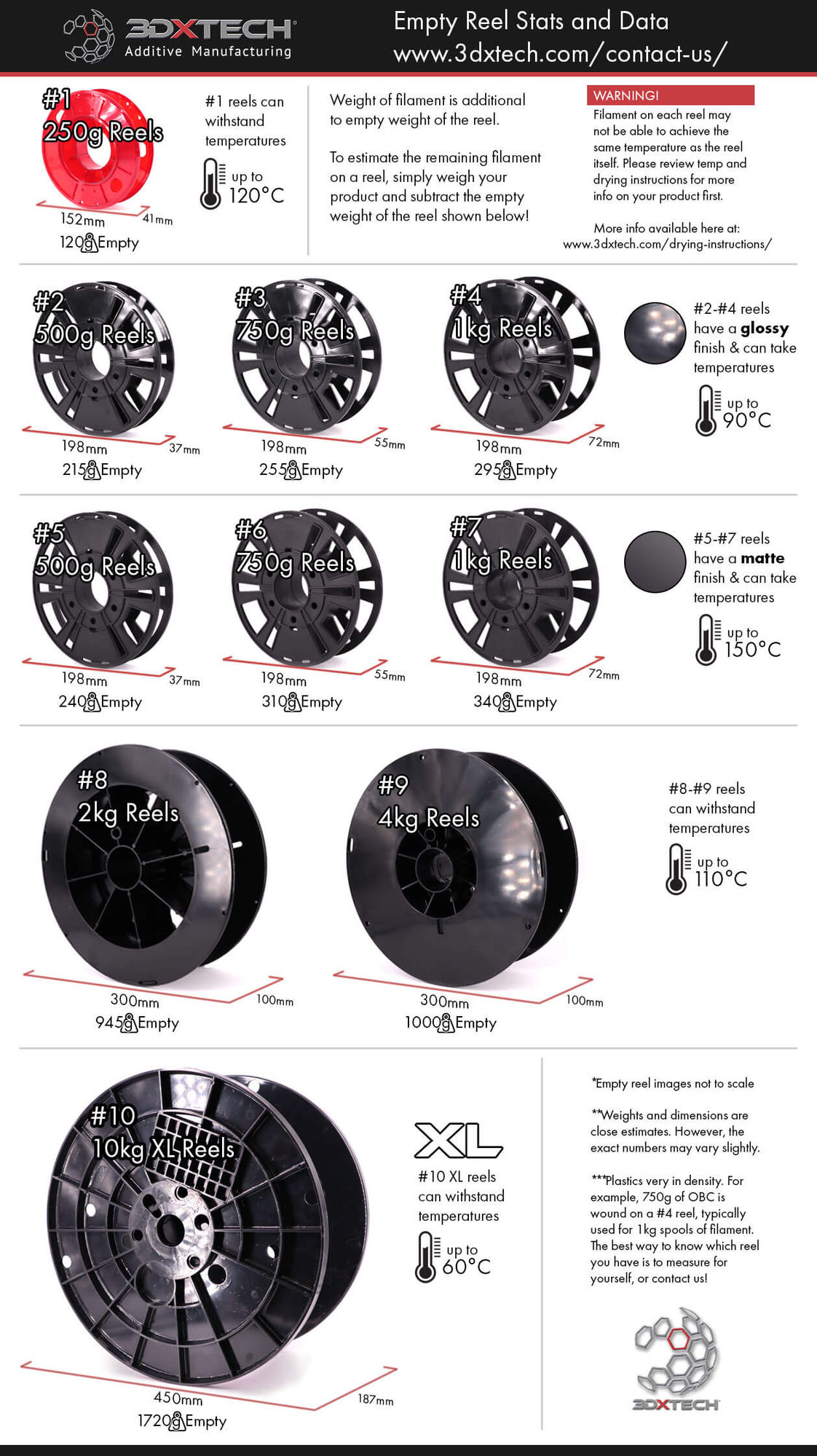
Standard spool dimensions — confirm it fits your AMS or dry box.
3DXTech ships CarbonX on consistent, standard reels.
The 750 g reel fits within the size requirements of popular automated material systems like the Bambu AMS, Creality CFS, and Anycubic ACE Pro — though a high-temp material like PEKK-A is best run from a heated dry box. Before you buy, check the outer diameter, width, and center bore against your printer's spool holder or drybox. Open the full 3DXTech reel infographic for exact 250 g, 750 g, and 2 kg spool dimensions.
View reel dimensions →