3DXTech CarbonX™ ezPC+CF Carbon-Fiber Reinforced Easy-Print Polycarbonate
Carbon-Fiber Reinforced Easy-Print Polycarbonate
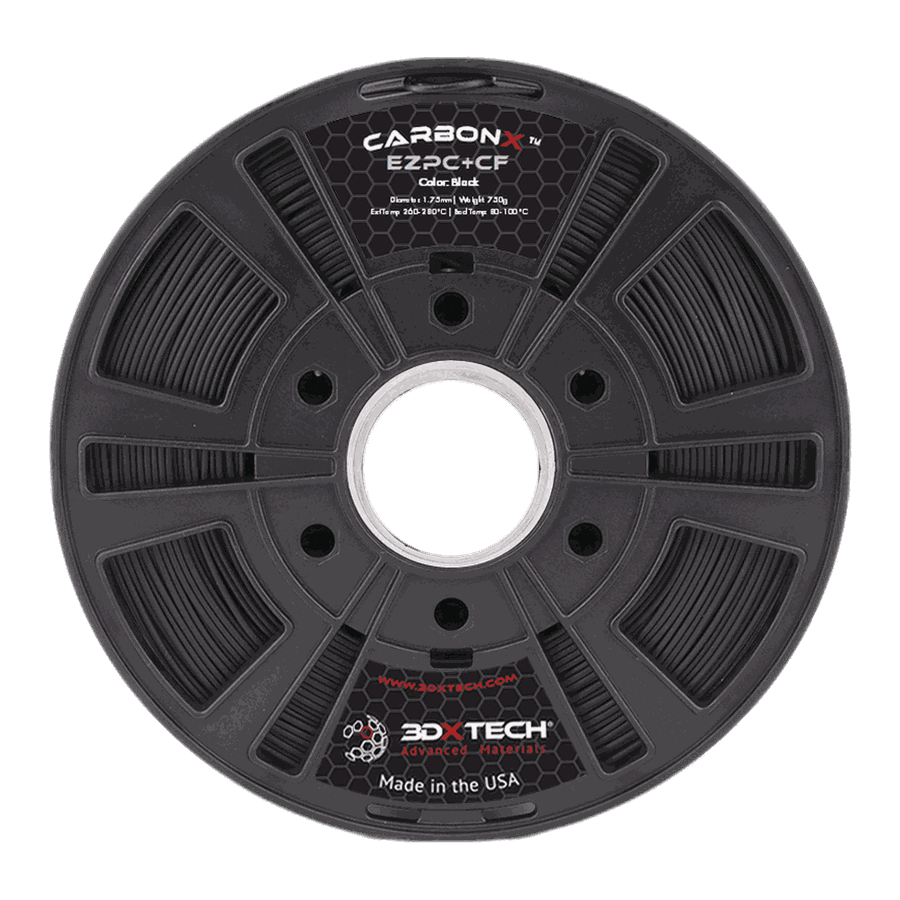
A high-stiffness, high-heat polycarbonate reinforced with chopped carbon fiber — engineered for structural parts that need dimensional stability and a great surface finish, yet prints in the 260–280°C range on most desktop machines with no heated chamber. Amorphous, near-isotropic, low-warp. Full specifications →
In stock in the USA — ships from Rev1. Need a print profile, the right diameter, or the 2 kg production reel? Call (248) 707-2950.
USA-made carbon-fiber polycarbonate, with a published datasheet behind it.
3DXTech compounds CarbonX ezPC+CF in Grand Rapids, Michigan with published ISO mechanical, thermal, and electrical data — no mystery blend. Rev1 Technologies is your authorized 3DXTech reseller and US support partner, Auburn Hills, Michigan.

Polycarbonate strength and heat — reinforced with carbon fiber.
Polycarbonate is one of the toughest, highest-temperature engineering thermoplastics you can print, but neat PC is prone to warping and can be fussy. CarbonX ezPC+CF starts from an easy-print polycarbonate base and adds chopped carbon fiber to raise stiffness and lock in dimensional stability — giving you a structural, heat-resistant part with an excellent matte surface finish that still prints in a normal desktop temperature window.
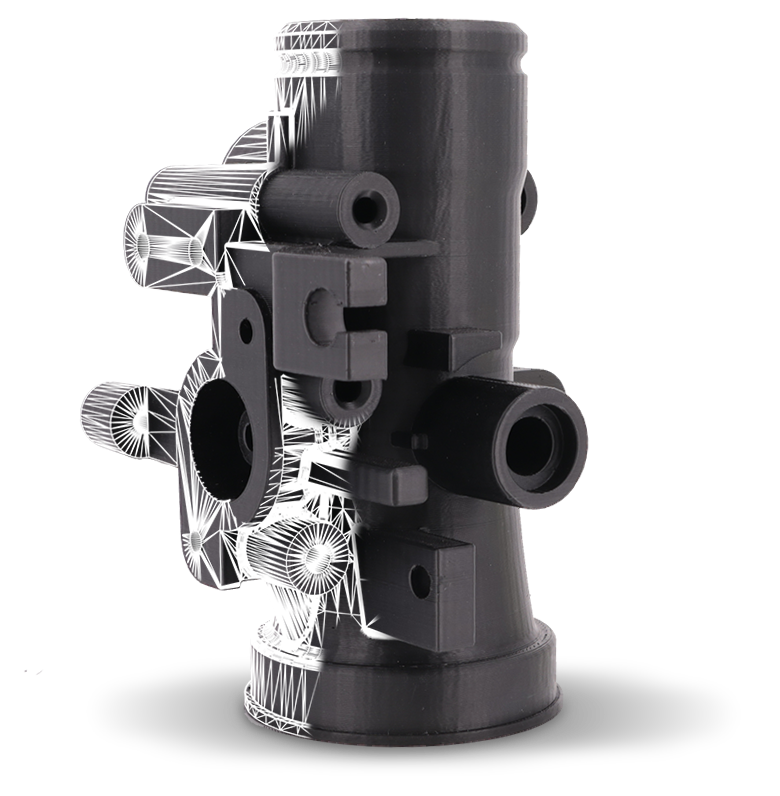
Print load-bearing components, not just prototypes.
Carbon-fiber reinforcement turns a printable PC into a stiff, dimensionally stable structural material.
The amorphous polycarbonate matrix gives near-isotropic, very low shrinkage (low CTE), so parts come off the bed true to CAD and stay that way. Chopped carbon fiber further improves stiffness and holds tight tolerances across temperature swings — ideal for brackets, housings, fixtures, and functional automotive or industrial components.
Published ISO numbers — not marketing estimates.
Every figure below is taken directly from the 3DXTech CarbonX CF-ezPC technical data sheet (TDS Rev 1.0), tested to ISO methods on XY-flat, 100%-infill specimens. See the full property chart at right.
ISO 527. Real load-bearing strength for functional, end-use components.
ISO 527. High stiffness from carbon-fiber reinforcement — resists deflection under load.
ISO 178. Resists breaking in bending — strong under sustained flexural load.
ISO 178. Holds its shape in bending — brackets and mounts stay rigid.
ISO 527. Stiff, filled behavior — design for rigidity, not high ductility.
ISO 1183. Light for its stiffness — strong stiffness-to-weight for structural parts.
High-heat polycarbonate — easy-print, by PC standards.
Polycarbonate’s hallmark is heat resistance: CarbonX ezPC+CF carries a 127°C glass transition and a 119°C heat-deflection temperature — well beyond PLA, PETG, or ABS. And a wide 260–280°C window with no required heated chamber makes it far more approachable than most PC or PC-CF blends. Use a hardened nozzle for the abrasive carbon fiber, dry before printing, and it runs on most capable desktop machines.
DSC. Parts keep their stiffness and shape at temperatures that soften commodity plastics.
ISO 75. Under-hood, enclosure, and near-motor parts stay dimensionally true.
ASTM D257. Carbon-fiber loading places it in the static-dissipative range.
Wide processing range suitable for most desktop printers; TDS specimens run at 275°C.
A heated bed with good first-layer adhesion; TDS specimens use 95°C.
No enclosed heated chamber needed — a major advantage over most high-temp materials.
Hardened steel, 0.4 mm minimum — carbon fiber is abrasive to brass nozzles.
TDS-recommended 0.25 mm or higher for reliable, consistent extrusion of the filled material.
Dry the spool before use — polycarbonate absorbs moisture that hurts surface quality.
Structural, heat-resistant parts across industries.
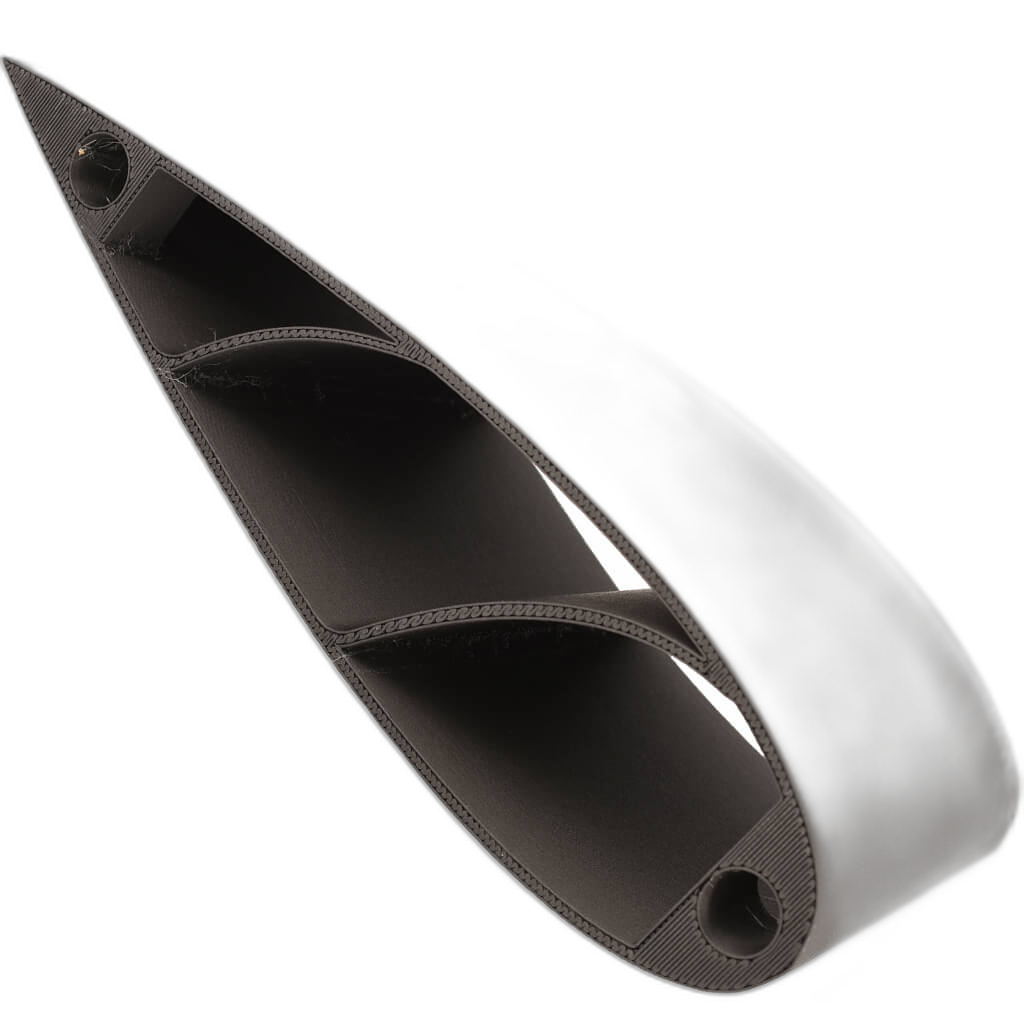
From aerospace fixtures to under-hood automotive.
Anywhere you need stiffness, heat resistance, and dimensional stability from a printable material.
CarbonX CF grades are chosen for structural components where stiffness-to-weight, heat resistance, and a clean finish matter — lightweight aerospace parts and airfoils, automotive brackets and housings, robotics arms and end-effectors, and jigs and fixtures for the shop floor. The stiff, filled extrusion holds sharp features and a professional matte finish straight off the bed, and polycarbonate’s low, near-isotropic shrink keeps part 100 matching part 1.
Matte carbon-fiber black — two diameters, three reel sizes.
CarbonX ezPC+CF ships in a single, purpose-built color: a deep matte carbon-fiber black. Carbon fiber diffuses light for a professional matte finish that hides layer lines, and the amorphous PC base keeps shrinkage low and near-isotropic so parts match CAD, print after print. It’s available in 1.75 mm and 2.85 mm on 500 g, 750 g, and 2 kg reels — choose your diameter and reel size in the buy-box, or ask us about bulk and standing-order pricing.
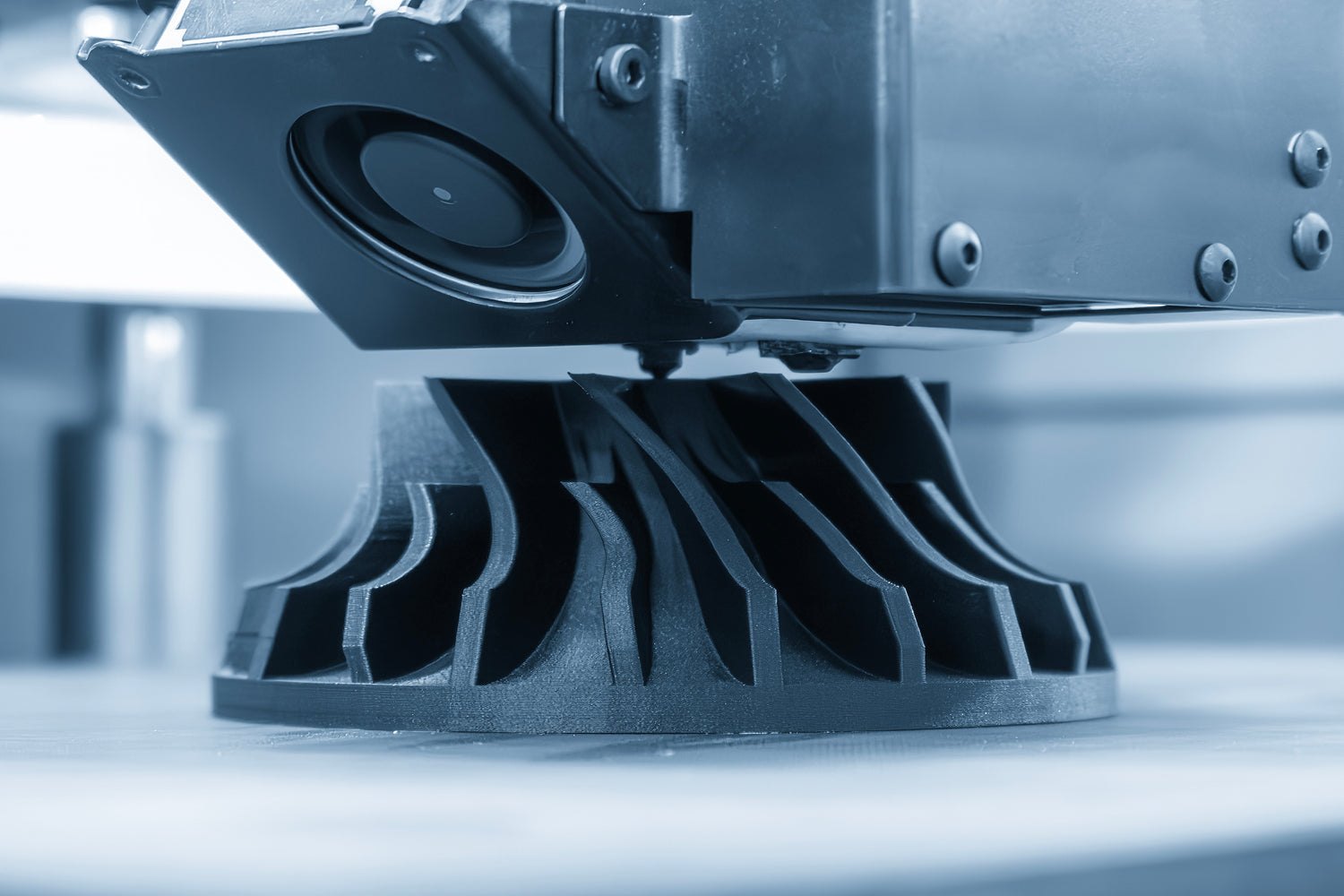
1.75 mm or 2.85 mm; 500 g, 750 g, or 2 kg.
Choose your diameter and reel size in the buy-box — price scales with the spool.
Start with a 500 g or 750 g spool to dial in your profile and validate the part, then scale to a 2 kg reel for production runs. The 750 g reels fit the size envelope of popular automated material systems like the Bambu AMS, Creality CFS, and Anycubic ACE Pro. The 2 kg reel is a minimum-order special order — contact Rev1 for scheduling and pricing.
Check the reel fits your printer.
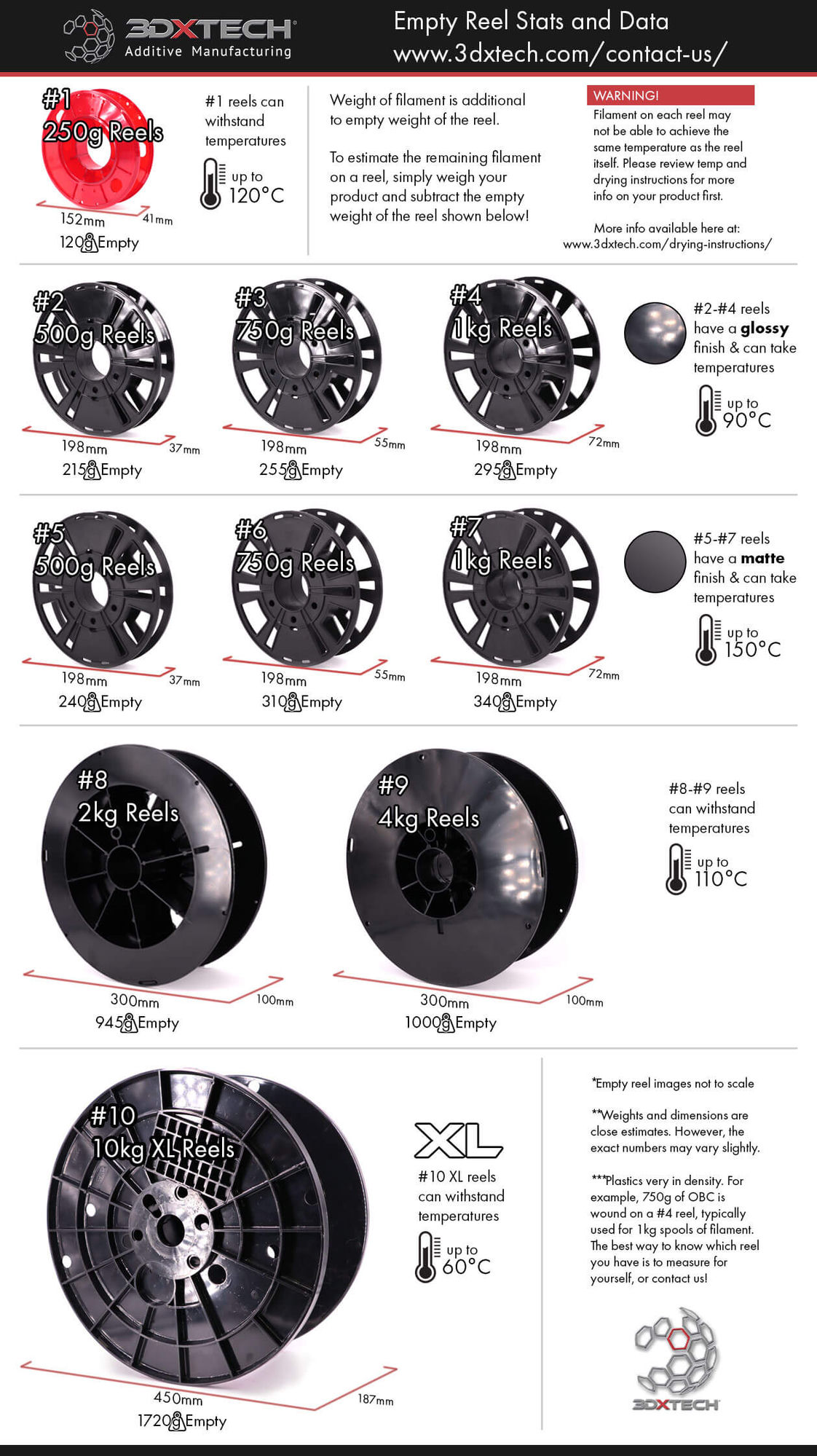
Standard spool dimensions — confirm it fits your AMS or dry box.
3DXTech ships CarbonX ezPC+CF on consistent, standard reels.
Before you buy, check the outer diameter, width, and center bore against your printer’s spool holder, automated material system, or drybox. Open the full 3DXTech reel infographic for the exact dimensions of the 500 g, 750 g, and 2 kg spools.
View reel dimensions →ezPC+CF vs. other carbon-fiber engineering filaments.
Approximate positioning among printable carbon-fiber reinforced engineering polymers; confirm exact figures against each TDS.
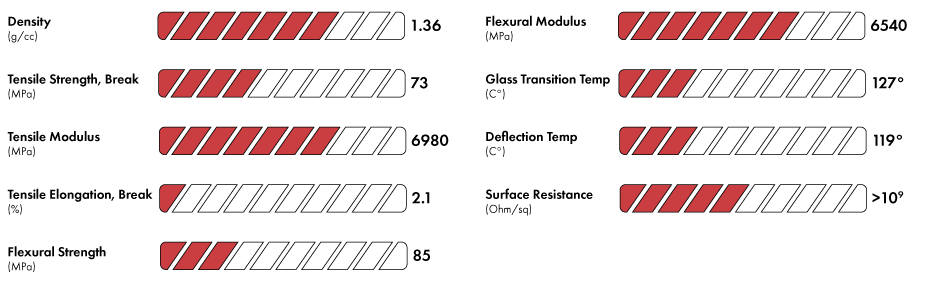
Stiff, strong, and stable under real load.
A ~6980 MPa tensile modulus puts ezPC+CF well above unfilled PC, ABS, or PETG.
Carbon-fiber reinforcement drives the modulus high while the polycarbonate base keeps strength honest — 73 MPa tensile at break and 85 MPa flexural strength. That stiffness-to-weight is what makes CF grades the default choice for jigs, mounts, and structural housings.
| CarbonX ezPC+CF | PC+CF (neat PC base) | PA-CF (Nylon-CF) | |
|---|---|---|---|
| Base polymer | Easy-print polycarbonate | Polycarbonate | Nylon (PA) |
| Heat deflection | 119°C (0.45 MPa) | ~130°C+ | ~100–150°C |
| Tensile modulus | ~6980 MPa | ~6000–8000 MPa | ~4000–7000 MPa |
| Heated chamber | Not required | Often required | Usually not required |
| Moisture sensitivity | Moderate (dry first) | Moderate | High (very hygroscopic) |
| Best for | Easy-printing structural PC parts | Max-temp structural parts | Tough, wear-resistant parts |
Comparison among printable carbon-fiber engineering polymers; exact properties vary by brand, grade, and test method.
3DXTech CarbonX ezPC+CF Technical Data
RESOURCES
Datasheets & Print Support
Everything you need to qualify, slice, and print CarbonX ezPC+CF with confidence.
WHY REV1 TECH
Authorized 3DXTech Reseller. Engineering-Materials Specialists.
Rev1 Technologies is an authorized 3DXTech reseller in Auburn Hills, MI, supplying genuine USA-made engineering filament with real print support.
We help you pick the right engineering polymer, dial in the profile, and keep production running.
FAQ
3DXTech CarbonX ezPC+CF — Common Questions
Do I need a heated chamber to print ezPC+CF?
No. Unlike most high-temp polycarbonate and PC-CF blends, ezPC+CF prints in a 260–280°C window with an 80–100°C bed and does not require an enclosed heated chamber — that’s what makes it “easy-print.” A capable desktop printer with a hardened nozzle handles it well.
Why do I need a hardened nozzle?
Carbon fiber is abrasive and quickly wears out standard brass nozzles. Use a hardened steel or wear-resistant nozzle, 0.4 mm minimum, to keep extrusion consistent and avoid clogs.
Do I have to dry it first?
Yes. Polycarbonate absorbs moisture, which causes stringing, bubbles, and weak layers. The TDS recommends drying at 80°C for 4 hours before printing, and keeping the spool in a dry box during long prints.
Which diameter and reel size should I buy?
Pick 1.75 mm or 2.85 mm to match your printer, then start with a 500 g or 750 g spool to validate your profile before scaling to the 2 kg reel. The 750 g reels fit popular AMS-style systems, and the 2 kg reel is a minimum-order special order — call (248) 707-2950 for lead time. Select diameter and size in the buy-box; price scales with the spool.
How does ezPC+CF compare to PC+CF or nylon-CF?
ezPC+CF trades a little peak temperature for much easier printing — no chamber required — while keeping polycarbonate’s stiffness and heat resistance (127°C Tg, 119°C HDT). Nylon-CF is tougher but far more hygroscopic. We’ll help you choose.
Is it made in the USA?
Yes — 3DXTech compounds CarbonX ezPC+CF in Grand Rapids, Michigan, with a published technical data sheet and lot traceability. It ships in a consistent matte carbon-fiber black.